Exploring the Dreamscape
I still remember the one that got me. I was back in my childhood bedroom, the same faded wallpaper, but I had my current adult mind. I was trying to warn my younger self about something trivial, a failed test maybe, but the words wouldn't come out right. The frustration was so real it jolted me awake. That's the thing about dreams of time travel—they feel different. They stick with you over your morning coffee, leaving a residue of "what if" that ordinary dreams rarely do.
You're not alone if you've had them. A huge number of people report these specific, disorienting narratives where the past and future get all mixed up. But what's really going on up there? Is it just random neural static, or is your brain trying to work through something massive using the most fantastical plot device imaginable?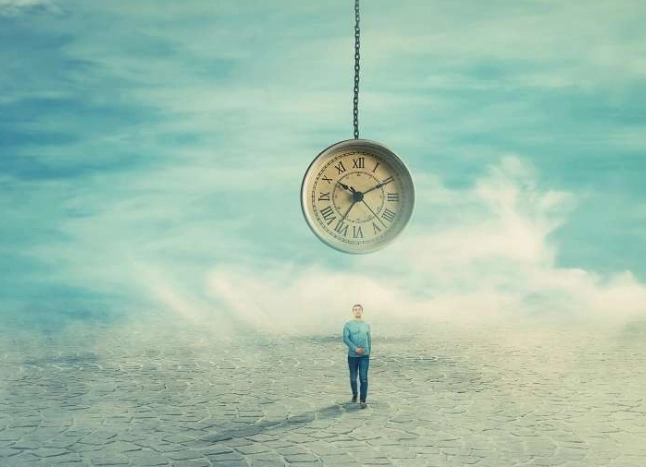
Let's ditch the dry, textbook explanations for a minute. This isn't about memorizing Freudian stages. It's about that eerie feeling of standing in a past you can't change, or a future you can't comprehend. We're going to walk through what psychologists think these dreams mean for you, personally. Then, because the line between dreaming and wondering is so thin, we'll peek into the actual science of time travel. What do physicists really say is possible? The answers might surprise you—they're stranger than any dream.
The Core Question: Why does our brain, a biological machine running in the steady forward march of time, so frequently dream in loops, leaps, and paradoxes? It's a contradiction that sits at the heart of both neuroscience and our own subjective experience.
More Than Just a Weird Dream: The Psychology Behind the Journey
Most dream analysts agree that time in dreams isn't linear. It's symbolic. Your brain isn't building a time machine; it's using the concept of time travel as a metaphor to process complex emotions and situations. Think of it as your mind's own special effects department, creating the perfect visual for an internal struggle.
So, what are the most common scripts for these nocturnal adventures, and what might they be pointing to?
Common Time Travel Dream Scenarios and Their Potential Meanings
- Traveling to the Past (Nostalgia & Regret Edition): This is the big one. You're back in your old school, your first apartment, a childhood home. Often, you have your present-day awareness. This can be a sign of nostalgia, sure, a longing for a simpler time. But more powerfully, it's often about unfinished business or regret. Your mind might be revisiting a moment where a different choice could have been made, a hurtful word unsaid, or a chance not taken. It's less about changing history and more about your current self trying to make peace with it. The American Psychological Association has resources on coping with regret that touch on how these feelings manifest, including in our dream life.
- Traveling to the Future (Anxiety & Preparation Edition): You're suddenly in a future job, a future relationship, or a future version of your home. This is frequently linked to anxiety about what's coming next. Will I be successful? Will I be alone? Will I be happy? The dream acts as a rehearsal space, sometimes a fearful one, for possibilities. It can also be about aspirations—seeing your future self as you hope to be.
- The Paralysis of Paradoxes: These are the dreams that truly mess with you. Trying to stop an event you know happens, meeting yourself, creating a time loop. Psychologically, this can reflect feeling stuck in a real-life situation. You might feel like your actions are futile, leading to the same bad outcome (a loop). Or, it could symbolize internal conflict—two parts of yourself (past and present) in confrontation.
I used to have a recurring one where I'd go back to high school with all my current knowledge, trying to ace every class and be the "cool" kid, but I'd always forget my schedule or my books would be in a language I didn't know. Looking back, it was painfully obvious: I was in a new, high-pressure job, feeling like an impostor who'd forgotten the basics. The dream was screaming about performance anxiety, not about actually reliving algebra.
It's also worth considering the emotional tone. Is the dream exciting and full of wonder? That might point to a desire for change or new perspectives. Is it frightening or frustrating? That likely highlights current stressors or feelings of powerlessness. The setting and emotions are the real clues, more than the time-travel mechanism itself.
But Could It Ever Be Real? The Science of Time Travel (Spoiler: It's Complicated)
Okay, so our brains use time travel as a metaphor. That's cool. But what about the real thing? The tantalizing idea that dreams about time travel might be tapping into some fundamental, yet-unlocked law of the universe? This is where we leave the therapist's couch and head to the physics lab.
Let's be brutally honest upfront: you won't be buying a DeLorean flux capacitor next year. The practical, engineering challenges are, with our current understanding, insurmountable. But theoretically? The door isn't completely slammed shut. Modern physics, primarily through Einstein's theories of relativity, allows for some mind-bending possibilities.
Theoretical Pathways Through Time
Physicists talk about a few serious (but highly speculative) concepts. These aren't magic; they're extreme solutions to the equations that describe our universe.
The most accepted form of "time travel" is actually into the future, and we're all doing it right now. It's called time dilation. The faster you move relative to someone else, the slower your time passes. GPS satellites have to correct for this tiny effect! If you could travel at a significant fraction of light speed for a while and return to Earth, you'd have aged less than everyone here. You'd have traveled to Earth's future. NASA's educational resources on relativity explain this phenomenon clearly, showing it's not science fiction but measurable science.
So, future travel? Technically possible, just wildly impractical.
Traveling to the past is the real headache. It introduces nasty paradoxes (like the famous Grandfather Paradox) that make physicists and philosophers wince. To make it even theoretically possible, you need to bend spacetime into a pretzel. The usual candidate is a wormhole—a hypothetical tunnel connecting two points in spacetime. If you could stabilize a wormhole (which would require exotic matter with negative energy, something we've never seen) and drag one end at near-light speed, time dilation could turn it into a time machine to the past.
See what I mean? It's a house of cards built on "ifs."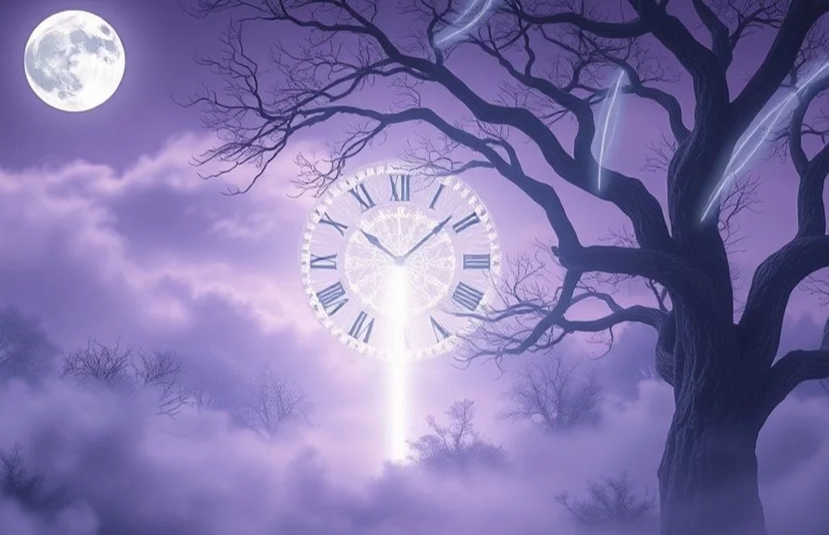
| Theoretical Method | Basic Principle | Evidence Status | Major Practical Hurdle |
|---|---|---|---|
| Time Dilation (Special Relativity) | Speed slows time for the moving object. | Extremely well-verified (particle accelerators, GPS). | Requires velocities close to light speed, immense energy. |
| Wormholes (General Relativity) | Shortcut through spacetime fabric. | Allowed by equations, never observed. | Requires exotic matter to stabilize, may be inherently unstable. |
| Cosmic Strings & Rotation | Massive, infinite objects warping spacetime. | Purely hypothetical; cosmic strings not confirmed. | Involves manipulating objects of astronomical scale. |
Reading this table, the gap between theory and reality feels huge, doesn't it? I find the wormhole idea particularly frustrating. It's mathematically elegant but feels like a cheat code the universe probably doesn't allow. Most serious physicists, like those publishing in journals covered by outlets like Scientific American, are deeply skeptical about backward time travel ever being feasible. The laws of causality—cause preceding effect—seem pretty fundamental to a stable universe.
Why We Can't Let the Idea Go: Culture, Hope, and Existential Dread
So if it's mostly a psychological tool and a remote physical possibility, why is the dream of time travel so persistent in our culture and our individual minds? I think it taps into our deepest human vulnerabilities.
It's about control. Life is messy and linear. We make irreversible mistakes. We lose people. We fear the unknown future. The fantasy of time travel is the ultimate fantasy of control—over our history, our mistakes, our destiny. It's a coping mechanism for the terror of a one-way journey through life.
It's also about curiosity. What *really* happened on that day? What will my child look like as an adult? What's the world going to be like in 200 years? This insatiable curiosity drives science and art. Our dreams of travelling through time are just the nocturnal expression of that drive.
Look at our stories. From H.G. Wells' The Time Machine to Back to the Future, Interstellar, and Dark, we keep revisiting the theme. Each story explores a different facet: social commentary, adventure, love, or complex paradox. They're all asking the same underlying questions about memory, consequence, and free will.
Bringing It All Back to the Waking World
So where does this leave us? With two powerful perspectives on the same haunting idea.
From the inside, our dreams of time travel are profound personal metaphors. They are the mind's way of grappling with the weight of our timeline—the regrets that anchor us in the past and the anxieties that pull us toward the future. They remind us that our perception of time is deeply emotional, not just chronological.
From the outside, the physics paints a picture of a universe that is strangely flexible yet rigidly protective of causality. Time travel to the future is a proven quirk of relativity, a cosmic promise that time is not absolute. Travel to the past remains in the realm of thrilling, edge-case mathematics, a ghost in the machine of general relativity that most scientists doubt could ever be made real.
The magic happens in the gap between these two views. In that gap is our human condition: biological creatures with linear lives, equipped with brains that can imagine nonlinearity and the intelligence to probe the laws that might, just might, allow it. Our nighttime dreams about travelling through time and our daytime scientific inquiries are fueled by the same engine—a profound desire to understand our place in the flow of time.
Maybe the next time you have one of those vivid, disorienting dreams, you can wake up with a new curiosity. Instead of just wondering "what was that about?", you can appreciate it as a sign of your brain's incredible narrative power to process your life's journey. And who knows? Maybe that faint, theoretical echo in the laws of physics means our dreams are touching on something fundamental about the universe, even if we never build the machine.
It's a comforting thought, anyway. That our most private night-time journeys might connect to the biggest questions of all.








Comments
Join the Conversation