You wake up with a start, heart pounding. The image of that hairy, eight-legged creature is stuck behind your eyelids. A dream of a tarantula can feel like a straight-up horror movie trailer playing in your sleep. Your first instinct might be to shake it off as a random scary dream.
But here's the thing I've learned after years of looking into dreams like these: it's almost never just random.
That tarantula is a messenger. It's one of the most potent and misunderstood symbols our subconscious uses. Most people get stuck on the fear and assume it's a bad omen. They miss the deeper layers—the parts about creativity, patience, and reclaiming your own power. Let's untangle what a tarantula dream really means.
What's in This Guide?
What a Tarantula Dream Does NOT Mean (Debunking Myths)
Before we dive into meanings, let's clear the air. Pop culture dream dictionaries often do more harm than good. They oversimplify.
Myth 1: It always predicts betrayal or an enemy. This is the most common, and laziest, interpretation. While it can point to a feeling of being threatened, jumping straight to "someone is out to get you" creates paranoia. The "enemy" is more often a situation, a habit, or an aspect of yourself.
Myth 2: It's a purely negative sign. Nope. In many spiritual and psychological frameworks, spiders are master weavers, symbolizing fate, creativity, and the intricate web of life. A tarantula, with its deliberate movements, amplifies this. A dream where you observe a tarantula weaving, or even feel a cautious respect for it, is light-years away from a dream where one is chasing you.
Myth 3: The bigger the spider, the bigger the problem. Size matters, but not in a linear way. A gigantic, looming tarantula might represent a fear that feels inflated and all-consuming in your mind, but may be more manageable in reality. A small, hidden tarantula you almost miss can symbolize a neglected issue that's quietly growing.
Core Meanings: Fear, Creativity, and the Shadow Self
So what is it trying to tell you? Think of the tarantula as a symbol with three primary channels. Your dream will tune into one more strongly based on the context.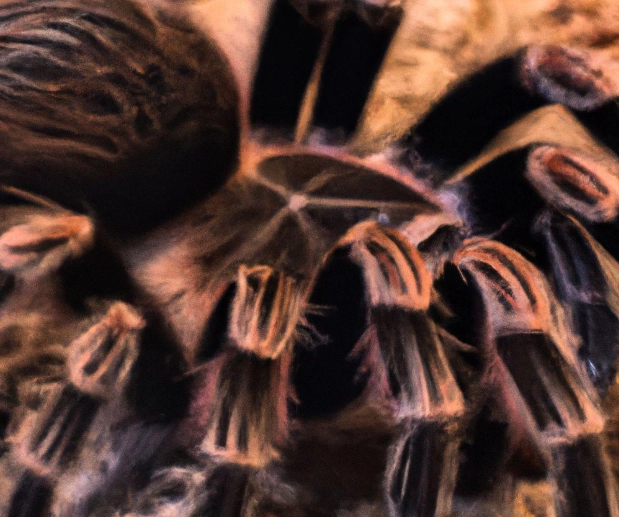
1. The Fear and Threat Channel
This is the most straightforward. The tarantula embodies something you perceive as dangerous, sneaky, or overwhelming in your waking life. The key is to identify the nature of the threat.
- A lurking tarantula: A problem you know is there but are avoiding (a difficult conversation, a financial issue, a health concern).
- A tarantula chasing/attacking you: Feeling actively pursued by stress, pressure, or a conflict you can't escape.
- A tarantula in your bed or house: A threat that feels personal, invasive, and close to your sense of safety and privacy. This could relate to family dynamics, relationship issues, or a violation of your personal boundaries.

2. The Creativity and Patience Channel
This flips the script. Here, the tarantula is a positive symbol of your own creative process. Tarantulas are solitary, meticulous weavers. They wait patiently for their moment.
- Watching a tarantula weave a web: You are in the process of building something complex—a business, a project, a new skill. The dream acknowledges the slow, detailed work required.
- A tarantula sitting calmly: A nudge to be patient. Your plans are still incubating. Rushing could break the "web."
- A brightly colored tarantula (like a pink toe): This directly connects to embracing unique, artistic, or unconventional aspects of your creativity. Don't hide your colorful ideas.
3. The Shadow and Feminine Power Channel
This is the deepest layer, drawing from Jungian psychology and ancient archetypes. The "shadow" represents the parts of ourselves we repress or deny. The tarantula, often linked to the feminine and primal earth energy, can symbolize this powerful, instinctual side.
A dream of a tarantula might be asking you to acknowledge a part of yourself you find "ugly," "scary," or too aggressive—perhaps your ambition, your anger, or your sensual nature. Integrating this shadow, not fighting it, is where real personal power lies. Research from institutions like the C.G. Jung Institute often explores how animal symbols in dreams represent these disowned parts of the psyche.
Interpreting Specific Dream Scenarios
Let's get practical. The devil (or the meaning) is in the details. Here’s how common dream scenes shift the interpretation.
Killing a Tarantula: This usually signifies an attempt to forcefully suppress a fear, a habit, or an aspect of your personality. The question is: was it a fight for survival or an act of aggression? The former suggests overcoming a major obstacle. The latter might indicate you're destroying something (like your creativity or a relationship) out of panic.
A Tarantula on You (Crawling, Biting): Pay attention to where on your body. • On your hand/arm: Connected to your actions or work (“the problem is in hand”). • On your back: A burden you're carrying, or a fear of being betrayed (“stabbed in the back”). • On your face/head: An obsessive thought, fear, or idea that you "can't get out of your head." A bite often means this issue is now causing you tangible pain or anxiety.
A Pet Tarantula: This is a fascinating one. It suggests you have learned to live with, manage, or even find value in something that once terrified you. It represents a tamed fear, a controlled power, or a creative project you are nurturing with care.
Baby Tarantulas or a Tarantula with Eggs: New beginnings, but of a potentially overwhelming kind. Multiple small spiders can mean a problem is multiplying or that numerous small anxieties are adding up. Eggs signify potential—ideas or projects in their earliest, most vulnerable stage.
Your Step-by-Step Framework to Decode Your Dream
Don't just read meanings—apply them. Here’s a method I use that works better than any generic dictionary.
- Record Immediately. Keep a notebook by your bed. Write everything before logic edits it. Color, size, location, action, and most crucially—your exact emotion (not just “scared,” but “frozen,” “curiously detached,” “strangely calm”).
- Isolate the Core Symbol. Strip the dream down. It’s not “a dream about my old kitchen.” It’s “a dream about a large, black tarantula in my old kitchen.” The tarantula is the core symbol; the kitchen is the context.
- Link to Waking Life (The ‘Like What?’ Test). This is the most important step. Ask: “In my life right now, what feels like a large, black, lurking presence?” Brainstorm without judgment. Is it a looming deadline (large)? A negative thought pattern (black)? A colleague’s undermining behavior (lurking)? Be specific.
- Check the Channel. Review the three channels (Fear, Creativity, Shadow). Which one best fits the feeling and the life situation you identified? Does the dream’s message feel like a warning, an encouragement, or a call to integrate a hidden part of yourself?
- Decide on One Action. Dream interpretation is useless without action. Based on your insight, choose one small, concrete step. If it’s a fear of a looming work project (the lurking tarantula), the action might be to block out 30 minutes tomorrow to make a project plan. If it’s about neglected creativity (the weaving tarantula), the action could be to spend 15 minutes sketching or writing.

A Real-World Case Study: Sarah's Office Tarantula
Let's make this real. Sarah, a project manager, kept having this dream:
“I’m at my office desk, working late. I sense movement and look down. A hairy, brown tarantula is slowly crawling out from under my keyboard. It’s not aggressive, just… there. I freeze, unable to scream or move. I just watch it climb onto a stack of reports.”
She was convinced it was about a treacherous coworker. Using the framework:
- Core Symbol & Emotion: A brown tarantula emerging from her work tool. Emotion: paralyzing fear.
- The ‘Like What?’ Test: What in her work life felt like a hidden, hairy, paralyzing problem emerging from her own tools? After thinking, she realized: a critical flaw in the data analysis model she had built for a major client presentation. She had suspected the flaw (the lurking presence) but was afraid to dig into it (paralysis) because redoing it would mean admitting a mistake and working nights.
- Channel: Primarily the Fear channel—a specific, tangible threat to her work.
- Action: She decided her one action was to stay one hour late the next day to audit the model, just for herself, no pressure.
The outcome? She found the flaw. It was fixable. The act of confronting it immediately reduced her anxiety. The tarantula dreams stopped. The spider wasn't a person; it was the unaddressed error in her own work. By confronting it, she integrated the “shadow” of her potential mistake.
Your Tarantula Dream Questions Answered
A dream of a tarantula is an invitation, not a sentence. It asks you to look at what you fear, what you are creating, or what part of yourself you have locked away. The next time you have one, reach for your notebook, not a panic button. That spider might just be trying to show you where your real power is woven.










Comments
Join the Conversation