You jolt awake, the somber images of a funeral procession still vivid behind your eyes. A coffin. Quiet mourners. That heavy feeling in your chest. Your first thought is often a panicked one: "Is this a premonition? Is someone going to die?" Let's clear that up right away. In the vast landscape of dream interpretation, a funeral dream is almost never a literal prediction of death. It's far more interesting than that.
These dreams are your subconscious mind's powerful, symbolic theater. It's staging an ending, a closure, a transformation. Think of it as your internal software running a major update—the old version needs to be ceremoniously shut down for the new one to install. The feeling can be unsettling, sure. But understanding the script can turn anxiety into profound insight.
What You'll Find in This Guide
Why We Dream of Funerals: The Core Psychology
From a psychological standpoint, dreams of funerals are rich with meaning. Pioneers like Carl Jung saw them as representations of the "shadow" self—parts of our personality we suppress or ignore. Burying something in a dream can symbolize integrating or finally letting go of those hidden aspects.
More broadly, these dreams surface during times of significant transition. It could be:
- Leaving a job you've had for years.
- Ending a long-term relationship.
- Moving to a new city, leaving your old community behind.
- Graduating and shedding your student identity.
- Even a major shift in beliefs or values.
Your waking life is going through a "death" of sorts—the death of a routine, an identity, a way of being. The funeral dream is the psychic ritual marking that passage.
Breaking Down Specific Funeral Dream Scenarios
The meaning shifts dramatically based on who is in the coffin and how you feel. Let's look at the most common variations.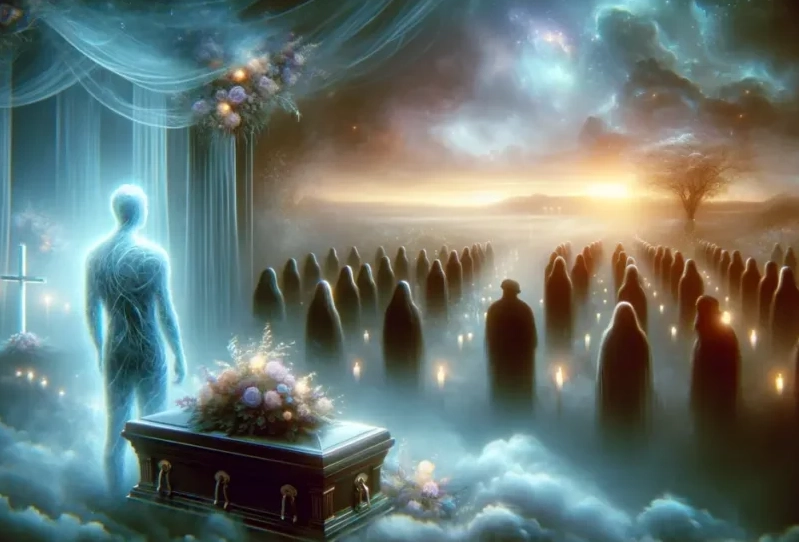
Dreaming of Your Own Funeral
This is the big one, and it freaks people out the most. I get it. But this is arguably the most positive transformation dream you can have.
Dreaming of your own funeral signifies the end of an old version of you. You are witnessing the burial of habits, attitudes, or life phases that no longer serve you. Are you listening to your eulogy? Pay attention to what's being said—it might highlight qualities you're leaving behind or legacies you're embracing.
I once worked with a client who had this dream repeatedly while starting her own business after decades in corporate life. In the dream, she saw her old business suit in the coffin. Her mind was ritually burying her "corployee" identity to make space for her "entrepreneur" self.
Dreaming of a Stranger's Funeral
A funeral for someone you don't know points to an abstract ending. You're letting go of an idea, a possibility, or a generic role. Maybe it's the death of "the perfect plan" you had for your life. Or it could represent saying goodbye to societal expectations you've been carrying.
If you feel relief in the dream, it's a sign you're ready to move on from a burden you can't even fully name.
Dreaming of a Parent's, Partner's, or Friend's Funeral
This is trickier and often more emotionally charged. It rarely means you wish harm on them. Instead, it typically symbolizes a change in your relationship with them, or with the qualities they represent to you.
Dreaming of a parent's funeral might mark your psychological separation into full adulthood. Dreaming of a partner's funeral could reflect fears of abandonment or, conversely, the end of a particular dynamic within the relationship (like dependency). The key is your emotional response in the dream and the current state of your waking relationship.
Key Symbols in Your Funeral Dream and What They Represent
The plot is important, but the set design holds the deeper clues. Here’s what common funeral dream elements often point to:
| Dream Element | Potential Symbolic Meanings | Questions to Ask Yourself |
|---|---|---|
| The Coffin | Containment, finality, what is being laid to rest. A sealed coffin suggests something is finished and shouldn't be reopened. An open coffin might indicate a need to confront or acknowledge what's ending. | What felt "boxed up" or finished in the dream? Did I look inside? |
| The Location (Church, Cemetery, etc.) | The context of the ending. A church ties it to beliefs, morals, or community. A stark cemetery suggests isolation or finality. An unusual place (like a beach) blends the ending with the qualities of that setting (peace, vastness). | How did the location make me feel? Was it familiar or strange? |
| The Mourners | Parts of yourself or your social world acknowledging the loss. Familiar faces show which relationships are connected to this change. Strangers might represent public perception or unknown parts of yourself. | Who was there? Did anyone's reaction stand out? |
| Flowers (or lack thereof) | Honor, respect, beauty in the ending. Lush flowers suggest a positive or respected transition. Wilted or no flowers might imply an unlamented or neglected ending. | Was the send-off dignified or barren? |
| Weather | The emotional climate of the ending. Rain can mean cleansing or sadness. Stormy weather suggests turbulent, chaotic change. Bright sun indicates clarity or peaceful acceptance. | What was the sky like? Did it match my feelings? |
Your dominant emotion during the dream is the most important decoder. Grief, relief, numbness, anxiety, or even boredom—each paints a different picture of how you're truly handling the underlying change.
How to Interpret Your Own Funeral Dream: A Practical 5-Step Process
Don't just Google a generic meaning. Your dream is personal. Try this instead, right after you wake up.
- Jot Down Everything, Fast. Don't filter. Write the images, feelings, snippets of conversation. Who was there? What was the mood? Details fade quickly.
- Link to Waking Life. Ask: "What in my life right now feels like it's ending, changing, or needs to be put to rest?" Think beyond the obvious. It could be a project, a mindset, a daily routine.
- Focus on the Feeling. Sit with the emotion from the dream. Is it a familiar feeling? When else have you felt it recently? The emotion is often a more accurate guide than the plot.
- Identify the 'Who' or 'What' Being Buried. Is it literally a person, or could it be "my patience," "my people-pleasing," "my old career ambitions"?
- Ask What Space is Being Created. Funerals make room. If X is being buried, what new thing (Y) now has space to grow? This reframes the dream from an ending to a potential beginning.
Skip the dream dictionary for a minute. Your first intuitive connection is usually the strongest.
Your Funeral Dream Questions, Answered

Dreams of funerals are profound invitations. They ask us to acknowledge endings so we can properly begin again. The next time one visits you, meet it with curiosity, not fear. Ask it what chapter is closing. Then, you might just hear the first page of the next one turning.










Comments
Join the Conversation