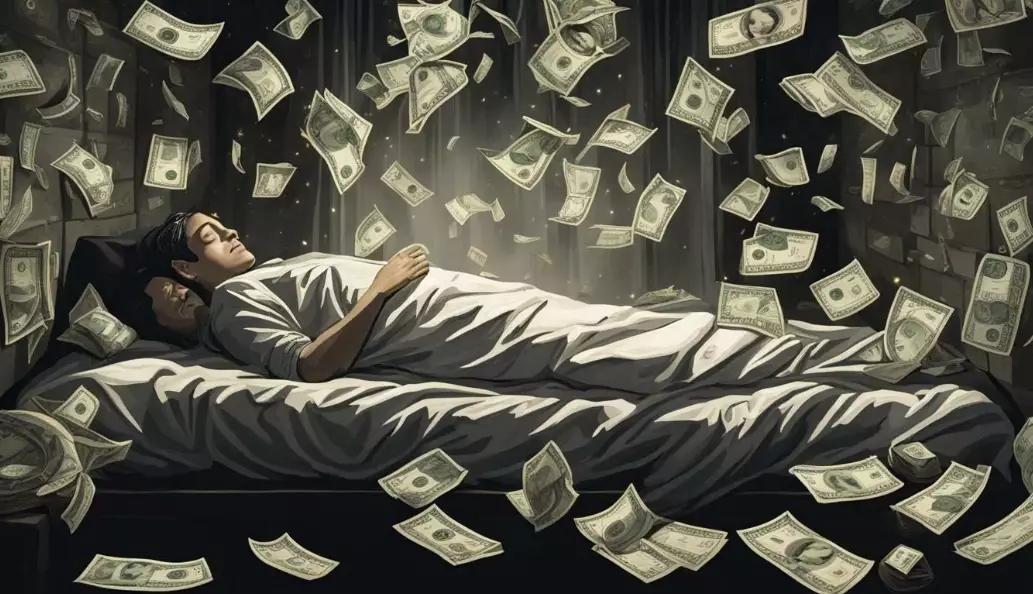
You wake up, the image of cash, a check, or a gold coin still vivid. It felt so real. Dreaming of money is incredibly common, but most online interpretations stop at the surface: "It means wealth is coming!" or "You're feeling insecure." After years of tracking my own dreams and helping others decode theirs, I've found that's a massive oversimplification. The real meaning hinges on details most people miss—the type of money, the action you're taking with it, and the gut-level emotion you feel in the dream. A dream about finding a crumpled dollar bill in a gutter carries a completely different message than one about confidently depositing a hefty check.
What's Inside This Guide
The 7 Most Common Meanings of Money Dreams (Beyond "You'll Be Rich")
Let's move past generic symbolism. Here are the specific scenarios and what they likely reflect about your waking life.
1. Finding Money
This often points to discovering untapped potential or a neglected opportunity. It's not necessarily literal cash. Where did you find it? Under the couch? That might be a skill you've "left under the furniture." In the street? Could be an opportunity in your public or professional life you're walking past. I once worked with a client who kept dreaming of finding antique coins in her garden. We linked it to her hobby of writing short stories—a "buried treasure" she wasn't sharing. She started a blog, and the dreams stopped.
2. Losing Money or It Being Stolen
This is the classic anxiety dream, but pinpoint the anxiety. Are you losing cash from your wallet? You might feel a loss of personal control or daily security. Is a large investment or bank account being wiped out? That could reflect fears about your long-term plans, career stability, or a relationship's "emotional investment" feeling risky. The thief's identity (a faceless figure vs. someone you know) can be a huge clue.
3. Receiving Money (Gift, Inheritance, Salary)
This usually symbolizes validation, reward, or an influx of energy/resources. Who is giving it? A boss might represent a need for professional recognition. A deceased relative could symbolize inheriting a trait or wisdom from them. Receiving an unexpectedly large salary might mean you're undervaluing your own worth in some area of life.
4. Counting or Sorting Money
Your mind is taking stock, assessing value, or trying to establish order. Are you counting coins meticulously? Maybe you're over-focusing on small details in a project. Sorting large bills from small? You could be trying to prioritize what's truly important in a chaotic situation. This dream often pops up during decision-making periods.
5. Dirty or Torn Money
This is a powerful one that many misinterpret. It rarely means the money itself is bad. It often suggests you have conflicting feelings about the source of your "value" or success. Did you achieve a promotion through a stressful, morally grey project? The dream might be processing that. It can also point to feeling that your self-worth is "soiled" by external opinions or past mistakes.
6. Infinite or Fake Money
Dreams of having endless wealth often reveal a fantasy of ultimate security or freedom from constraints. Ask yourself: what would that freedom allow you to do? The answer is the real desire. Fake money (obvious counterfeits, Monopoly money) is a red flag from your intuition. It's shouting: "Something here is not genuine!" This could apply to a business deal, a person's intentions, or even your own motivations in a situation.
7. Giving Money Away
This can be positive or negative. Are you giving generously and feeling joy? You might be ready to share your resources, time, or knowledge. Are you being forced to give it or feeling resentful? You might feel your energy is being drained by an obligation or person. It's a direct look at your boundaries around what you "give."
Why Context is Everything in Dream Interpretation
Knowing the seven types is useless without the key to decode which one applies to you. That key is context. If I just tell you "dreaming of finding money is good," I've done you a disservice.
You must interrogate the dream's specific details:
The Emotion: This is the most important filter. Were you anxious, joyful, indifferent, or confused in the dream? The same action with different emotions has opposite meanings. Finding money while terrified suggests discovering something you're afraid to handle. Finding it with glee points to welcomed potential.
The Type and Amount: Coins vs. bills, a specific currency, a check vs. cash. A dream of a single, heavy gold coin feels different from a dream of a million flimsy dollar bills. One suggests dense, singular value. The other suggests scattered, perhaps overwhelming, quantity.
Your Waking Life Trigger: What happened the day before? A fight with a spouse about bills? A presentation at work where you felt undervalued? A news article about the economy? Dreams often process the emotional residue of the day, not the event itself.
I keep a notebook by my bed. The rule is to write three things immediately upon waking: 1) The main image/action, 2) The dominant feeling, 3) One real-life thing from yesterday that vaguely connects. Over time, patterns emerge that are unique to you.
What to Do After a Powerful Money Dream: A 4-Step Plan
So you've had a vivid dream. Now what? Don't just google it and forget. Use it.
Step 1: Record Immediately. Before you check your phone, grab that notebook. Sketch the money, write the action, lock in the feeling. Details evaporate in minutes.
Step 2: Ask "What Feels Like This?" Don't jump to finances. Sit with the dream's emotion. That feeling of losing money—where else in your life do you feel that same drip of panic or loss of control? Is it in a relationship? A creative project? Your health? This is where the real link forms.
Step 3: Identify the Opposite Action. Dream of being robbed? Where in your life do you need to fortify your boundaries? Dream of finding coins? Where can you look more closely at what you already have? The dream often highlights a problem; the solution is frequently the symbolic opposite action.
Step 4: Take One Tiny, Real-World Step. This makes it practical. If the dream was about undervalued self-worth (receiving a tiny salary), your action might be to update your LinkedIn profile with a recent accomplishment. If it was about chaotic counting, your action could be to make a simple priority list for the week. The step should be small but concrete.
A Quick Guide to Common Money Dream Symbols
Sometimes the specific object holds meaning. Use this as a starting point for your own reflection.
| Symbol | Common Associations & Questions to Ask Yourself |
|---|---|
| Coins | Small change, details, foundational value, ancient wisdom. "Am I ignoring the small, valuable pieces?" |
| Dollar Bills / Paper Currency | Agreed-upon value, social exchange, daily transactions. "How am I exchanging energy in my relationships/work?" |
| Gold | Inherent, timeless value, authenticity, spiritual wealth. "What is my core, untarnishable worth?" |
| Checks | Promised value, future potential, formal agreements. "What promise am I waiting to be fulfilled?" |
| Credit/Debit Card | Abstract value, debt/credit (energetic or literal), future consequences. "Am I operating on borrowed energy or time?" |
| Wallet/Purse | The container of your value, identity, personal resources. "How am I carrying my sense of self-worth?" |
| Bank Vault | Guarded resources, savings (emotional or material), security measures. "What am I protecting too much, or not enough?" |
Remember, these are archetypes. Your personal connection to a symbol overrides any general list. If you inherited a coin collection from your grandfather, coins in your dream will always carry that personal layer of legacy.










Comments
Join the Conversation