You jolt awake, heart pounding, the vivid image of a death in your dream clinging to you. Maybe you saw yourself die. Maybe it was a parent, a partner, a friend. The feeling is visceral—dread, grief, confusion. Your first thought might be a terrifying premonition. I've been there. After years of working with dreams, I can tell you this: a dream about death is almost never a literal prediction. It's one of the most common and most misunderstood dream themes. The real meaning is far more interesting and almost always points to something happening within you.
Let's cut through the generic "death means change" advice. That's too vague to be helpful. A dream where you're murdered in an alley has a different message than one where you peacefully attend your own funeral. Context is everything. This guide will help you move from fear to understanding by unpacking the specific symbolism, emotional tones, and personal contexts that turn a disturbing dream into a valuable insight.
What's Inside This Guide
Moving Beyond the Surface Fear
Most online dream dictionaries do a disservice. They offer a one-word translation: Death = End. This creates unnecessary anxiety. In the symbolic language of dreams, death predominantly represents transformation, conclusion, or the release of something that no longer serves you.
Think about phrases we use in waking life: "My career is dead-end." "That idea died in the meeting." "I need to kill my bad habit." We instinctively use death metaphorically to signify an end. Your dreaming mind does the same, but with more drama.
Here's a crucial, often-overlooked point: The identity of who or what dies is your dream's way of highlighting what part of your life or psyche is undergoing this transformation.
Decoding Common Death Dream Scenarios
Let's get specific. The scenario changes the meaning. Below is a breakdown of the most frequent types of death dreams and what they typically point towards.
| Dream Scenario | Common Symbolic Meaning (Not Literal!) | Questions to Ask Yourself |
|---|---|---|
| Dreaming of Your Own Death | Major personal transformation. The "old you"—a set of beliefs, an identity, a life phase—is ending to make way for the new. It can signal rebirth. | What part of my life or self feels like it's ending? Am I resisting a necessary change? |
| Death of a Parent | Shifting internal authority. Moving from dependence to independence. The "parental" voice in your head (rules, traditions, expectations) may be losing its power. | Where am I stepping into my own authority? Are outdated family expectations holding me back? |
| Death of a Partner or Spouse | Evolution of the relationship dynamic, or the end of a specific phase within it (e.g., the passionate honeymoon phase). Can also represent the "death" of a personal trait mirrored by your partner. | How is my relationship changing? Is there a part of myself I've outsourced to my partner that I need to reclaim? |
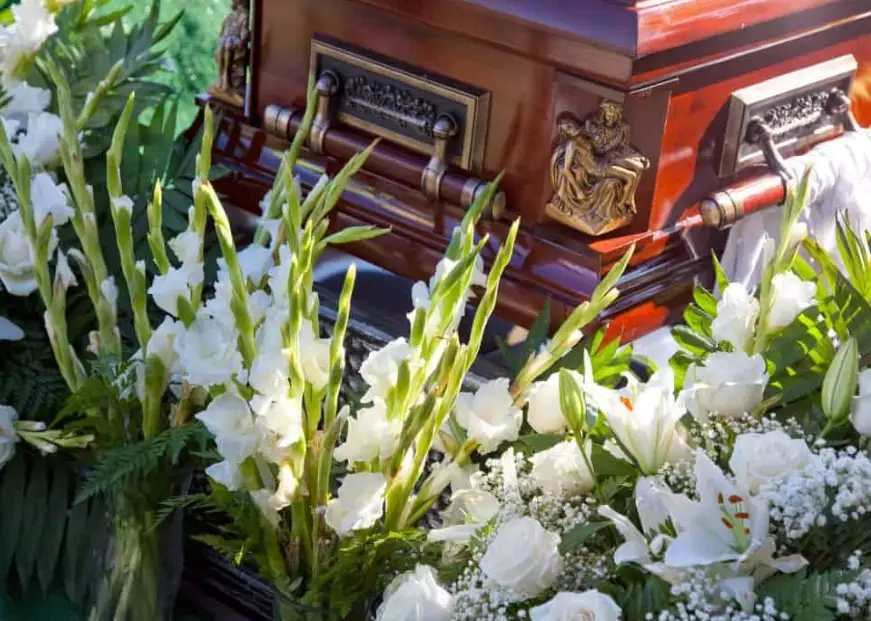
| Attending a Funeral | A conscious acknowledgment and ritualistic goodbye. You are formally processing an ending. This can be healthier than a sudden death dream, as it implies acceptance. | What am I actively trying to say goodbye to? What ritual or action would help me mark this ending in waking life? |
| Witnessing a Stranger's Death | Often relates to an impersonal end or the death of an opportunity, project, or anonymous aspect of yourself you haven't fully owned yet. | What has recently ended abruptly? What potential faded away without much fanfare? |
I once worked with a client, Sarah, who kept dreaming her vibrant, outgoing mother was ill and dying. In reality, her mother was healthy. The breakthrough came when Sarah realized her mother represented her own inherited "life of the party" social persona. She was exhausted from constant entertaining but felt guilty for wanting quiet. The dream wasn't about her mother; it was about her need to let that exhausting part of her own personality rest, or even "die."
Why Your Feeling in the Dream is the Master Key
This is non-negotiable for accurate dream interpretation death analysis. The plot is secondary to the emotion.
Likely Meaning: Your boss might symbolize structure, stability, or direction in your career. The grief suggests you value this and fear its loss, perhaps due to company changes or your own thoughts of leaving.
Likely Meaning: Here, your boss likely represents oppressive authority, control, or limitation. The death symbolizes your deep desire to be free from that pressure. It might reflect an upcoming change or an internal shift where you're overthrowing that inner critic.
See the difference? The same event, opposite emotions, completely different messages. Ignoring the feeling is like trying to understand a movie with the sound off.
What to Do After a Disturbing Death Dream: 3 Practical Steps
Don't just shake it off and worry. Engage with it. This turns a source of anxiety into a tool for self-awareness.
1. Immediate Capture: Keep a notebook by your bed. Upon waking, write down everything before logic edits it. Key details: Who died? How? Who was present? Most importantly, what was the predominant feeling? A single word like "dread," "peace," or "shock" is enough.
2. The "As If" Exercise: Later in the day, re-read your notes. Then complete this sentence: "In my waking life, I feel as if [who/what died in the dream] is coming to an end or transforming." Don't censor yourself. The first answer that pops up is often the most accurate. For example, "I feel as if my patience with my current job is dying."
3. Identify the "New Life": Nature abhors a vacuum. If something is ending, what wants to begin? Ask: "If this [old habit, situation, mindset] is dying, what new space is being created for me?" This shifts focus from loss to potential.
Cultural and Spiritual Perspectives (Beyond Psychology)
While modern psychology, heavily influenced by the work of Carl Jung, views these dreams symbolically, other traditions offer different lenses. It's worth considering these, not as absolute truth, but as alternative frameworks.
In some ancestral and shamanic traditions, dreams of death can be seen as visits to the spirit world or encounters with ancestors, signaling a time of deep spiritual transition or the need to honor one's lineage. Certain branches of modern spirituality might interpret a peaceful dream of one's own death as an ascension dream or a sign of ego dissolution.
However, a critical note from my experience: jumping straight to a paranormal or precognitive interpretation is usually an avoidance tactic. It's more frightening to consider that the dream is about our own internal chaos than to think it's a mysterious external message. Always rule out the psychological and personal meaning first. The American Psychological Association notes that dreams are primarily a cognitive process dealing with memory and emotion. Starting there is your most grounded approach.
The cultural context matters, too. In cultures with different attitudes towards death, like some that celebrate ancestral connections, these dreams might carry less inherent terror and more of a communal significance.
Your Burning Questions Answered
Dreams about death are unsettling, but they're not your enemy. They're a profound part of your inner navigation system, signaling when a major chapter is closing. By learning to interpret the specific symbols and, above all, honoring the emotion they carry, you can transform a moment of midnight terror into a clear signal for your own growth. The next time you have one, take a deep breath. Get curious. Your mind isn't terrifying you; it's trying to tell you something important about the endings that make new beginnings possible.








Comments
Join the Conversation