Let's be honest. Waking up from a dream where you're drowning is a uniquely horrible feeling. Your heart is pounding, you might even be gasping for air, and that panicked, helpless sensation can linger for hours. It's not like your typical weird dream about showing up to work in your pajamas. This one feels visceral, urgent. It sticks with you.
In This Guide
- Beyond the Panic: Common Themes in Drowning Dreams
- Decoding the Details: Your Personal Drowning Dream Dictionary
- What To Do After a Drowning Dream: Practical Steps (Not Just Interpretation)
- Drowning Dreams and Mental Health: When to Pay Closer Attention
- Wrapping It Up: Listen to the Symbol, Not Just the Fear
- Your Drowning Dream Questions, Answered
I remember one a few years back. I was in a vast, dark ocean, and no matter how hard I kicked, the surface kept getting farther away. Woke up clutching my chest. It felt so real I had to check my sheets weren't wet. That experience, and countless conversations with friends who've had similar dreams, got me digging. What's the deal with these terrifying water nightmares?
The short answer? Your brain is screaming at you about something you're probably ignoring while awake. A drowning dream meaning is rarely literal. You're not going to fall into a pool tomorrow. Instead, it's a powerful metaphor your subconscious uses when words fail. It's about feeling overwhelmed, out of your depth, or emotionally suffocated. But that's just the surface. The specifics—*are* you drowning? *Watching* someone drown? In a pool or an ocean?—change everything.
Think of your drowning dream as a dramatic, internal alarm system. It's not there to scare you for fun. It's trying to highlight an emotional or psychological pressure point that needs your attention. Ignoring it is like silencing a smoke alarm because the beeping is annoying.
Beyond the Panic: Common Themes in Drowning Dreams
Most people jump straight to "I'm stressed." And sure, that's often a big part of it. But the symbolism of water and drowning is incredibly rich in psychology and mythology. Water represents emotion, the unconscious, the flow of life itself. Drowning in it? That's about being consumed by those very things.
Here's a breakdown of the most common threads experts and dream analysts pull on when interpreting a drowning dream meaning. See which one makes your stomach drop with recognition.
Feeling Overwhelmed and Out of Control
This is the classic, number one interpretation for a reason. Are you drowning in work emails? Drowning in debt? Drowning in family obligations? Your dream translates that figurative language into a literal, physical experience. The endless water is the endless to-do list. The inability to breathe is the feeling that you have no time for yourself. The struggle is your daily grind.
It's your mind's way of saying, "Hey, this pace is not sustainable. You need a gulp of air." Sometimes the most basic interpretation is the right one.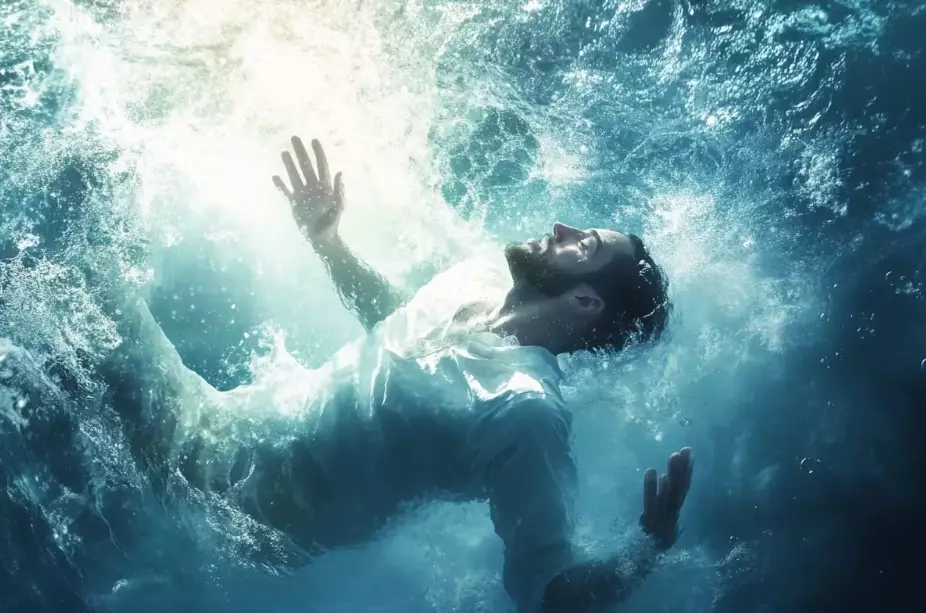
Emotional Suppression or Flooding
Water = emotion. So what does drowning mean here? Two opposite, yet related, things.
First, it can mean you're drowning *in* unchecked emotions. Grief, anger, fear, or even intense love that feels too big to handle. The dream is the floodgate breaking. You're being swept away by feelings you've tried to dam up.
Second, and this is the sneaky one, it can represent the *fear* of those emotions. You're not letting yourself feel something painful, so you dream of drowning as a warning of what might happen if you ever let that feeling in. It's a paradox: you drown from both having too much water and from desperately trying to avoid it.
A friend of mine had recurring drowning dreams after a breakup. He thought he was "fine" and "over it." The dreams were his subconscious calling BS. He wasn't drowning in sadness; he was drowning in his effort to *not* be sad. Once he actually let himself feel rotten for a bit, the dreams stopped. Go figure.
Fear of Failure or "Going Under"
This is big for people facing a high-stakes situation. A major project, an exam, a business venture. The dream isn't about water; it's about sinking. It's the fear of not being able to stay afloat, of failing publicly, of all your efforts not being enough to keep your head above water. The surrounding details matter. Are you drowning alone in a quiet pool (a personal, private failure) or in a stormy sea with people watching (a public downfall)?
Transformation and Rebirth (The Positive Spin)
Here's where dream interpretation gets interesting. In many spiritual and mythological traditions, water is a symbol of purification and rebirth. To drown in a dream can symbolize the "death" of an old part of yourself, an old habit, or an old way of thinking.
The key question here is: what happens *after* you stop struggling? In some powerful dreams, the person stops fighting, sinks, and then finds they can breathe underwater. Or they transform. This can signal a profound subconscious acceptance of a change. You're not being destroyed; you're being reshaped. It's scary as hell because it involves letting go of control, but the potential outcome is a newer, more adapted you. Carl Jung talked a lot about this kind of symbolism in the process of individuation.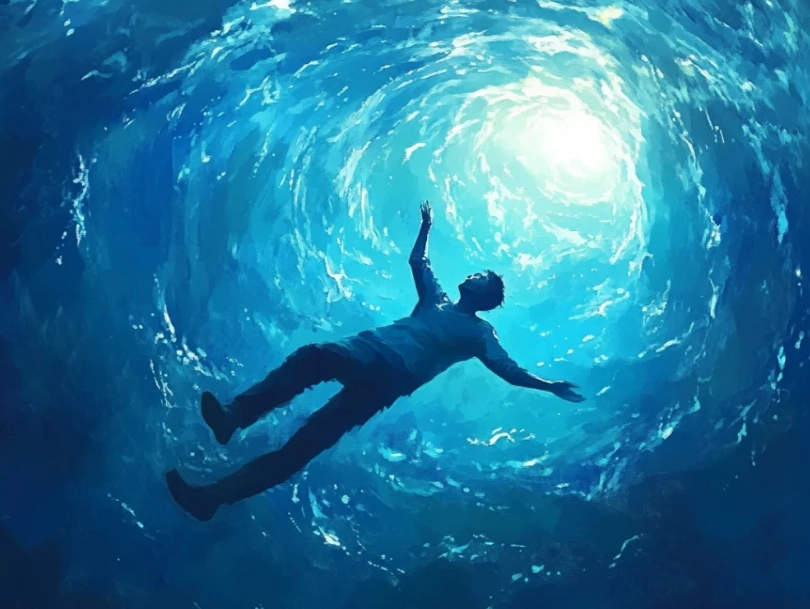
It's a less common take on the drowning dream meaning, but for those who experience it, it's often a dream they remember for life, not for its terror, but for its profound strangeness and subsequent sense of calm.
A crucial disclaimer: While exploring the drowning dream meaning can be insightful, it is not a substitute for professional mental health care. If you are experiencing severe anxiety, depression, or trauma, and these dreams are frequent and distressing, please consider speaking with a therapist. Dream analysis is a tool for self-reflection, not a diagnostic manual.
Decoding the Details: Your Personal Drowning Dream Dictionary
The general themes are a starting point. But the real gold is in the specifics of your dream. The setting, the characters, and your actions fine-tune the message. Let's break it down. I find a table helpful here to compare scenarios side-by-side.
| Dream Scenario | Possible Symbolism & Questions to Ask Yourself |
|---|---|
| Drowning in an Ocean/Sea | Overwhelmed by a vast, seemingly endless situation. Feelings are deep and powerful. Is the issue work-related, emotional, or existential? The ocean often points to the unconscious mind itself. |
| Drowning in a Pool | The overwhelm is in a more controlled, "man-made" environment. Could relate to social situations, family dynamics (the "family pool"), or a specific project you signed up for. |
| Drowning in a Car | A potent symbol of losing control of your direction/path in life (the car) due to emotional flooding. Are you "in over your head" with a life decision you've made? |
| Watching Someone Else Drown | Feeling helpless to save a loved one from their own struggles. Could reflect caregiver burnout or anxiety about someone's life choices. It might also represent a part of yourself you feel disconnected from and are watching suffer. |
| Being Saved from Drowning | Acknowledging you need help and are open to receiving it. Could signal hope, or a specific person in your life who is your support. |
| Calmly Sinking / Breathing Underwater | As mentioned, a strong symbol of acceptance and transformation. You are learning to exist in a new emotional "element." |
| Drowning in Mud or Quicksand | Feeling stuck, trapped, and slowly consumed. This isn't a clean flood; it's a murky, suffocating situation you feel you can't extract yourself from (e.g., a toxic relationship, a dead-end job). |
See how the core feeling of "overwhelm" gets a different flavor in each scene? That's why jotting down details as soon as you wake up is so valuable. The difference between a pool and an ocean can point you toward the source of the pressure.
What was the water like?
Clear blue water suggests the emotions, while overwhelming, might be "clear" or understandable. Dark, murky, or stormy water points to confusion, fear, or unknown psychological depths. Icy water? That's often linked to emotional coldness, isolation, or a frozen, numb state.
What To Do After a Drowning Dream: Practical Steps (Not Just Interpretation)
Okay, so you've thought about the possible drowning dream meaning. Now what? You can't just say "Ah, I'm overwhelmed" and go back to sleep. The dream is a call to action, however small. Here’s a practical, non-fluffy list of things you can actually do.
- Don't Just Dismiss It. The worst thing you can do is shake it off as "just a weird dream." It came from your brain for a reason. Give it 60 seconds of honest reflection when you wake up.
- Journal the Details. Not a novel. Just bullet points. Water type? Who was there? How did you feel? Not just "scared," but "a specific panic that my legs were too heavy to kick." This physical detail might later connect to feeling "weighed down" by responsibility.
- Connect the Feeling to Waking Life. This is the main event. Before you get out of bed, ask: "When did I feel this exact flavor of helpless panic yesterday? Or last week?" Don't force a connection, just let your mind wander. It might not be obvious. The link could be subtle—like the quiet dread before opening your bank app, not the big fight with your partner.
- Identify One Tiny "Breath of Air." What is one microscopic thing you can do today to address the core feeling? If it's overwhelm, can you delegate one task? Say no to one request? If it's emotional suppression, can you name the feeling to a friend or just to yourself in the mirror? The action is less important than the signal it sends to your subconscious: "Message received. Taking steps."
- Consider a Stress Audit. If these dreams are frequent, take a brutally honest look at your life. Where are your boundaries non-existent? What are you tolerating that you shouldn't be? Sometimes the dream about drowning is the only quiet moment your brain gets to scream.
The goal isn't to never have a stressful dream again. That's impossible. The goal is to build a better communication line with your subconscious. When you take small actions in waking life, you're essentially saying, "You don't have to send a terrifying blockbuster movie to get my attention. A simple memo will do."
Drowning Dreams and Mental Health: When to Pay Closer Attention
Let's get serious for a moment. While most drowning dreams are about transient stress, they can sometimes be linked to deeper psychological patterns. I'm not an alarmist, but I think it's irresponsible to talk about this topic without mentioning it.
Recurring, violent drowning dreams, especially ones that disrupt your sleep night after night, can be a symptom of underlying anxiety disorders, PTSD, or depression. In cases of trauma, the drowning symbol might be a direct or metaphorical replay of a feeling of being powerless or suffocated during the traumatic event.
The American Psychological Association (APA) notes that distressing dreams are a common feature of post-traumatic stress disorder. If your dreams feel like relentless replays of a past horror, or if the fear from the dream seeps into your entire day, making it hard to function, this is more than standard dream interpretation territory.
This is when seeking help is a strength, not a weakness.
A good therapist won't just interpret the dream for you. They'll help you build tools to manage the anxiety that fuels it, process any underlying trauma, and improve your overall sleep hygiene. They use frameworks that consider your entire life context, which is something a generic online article (even a long one like this) can never do. You can find licensed professionals through directories on the Psychology Today website or by seeking referrals from your primary care doctor.
Your Drowning Dream Questions, Answered
Is dreaming about drowning a bad omen?
Absolutely not. This is a super common fear. Dreaming about drowning is almost never a premonition or a sign of literal danger. It's a reflection of your current inner emotional or psychological state. It's an omen only in the sense that a check engine light is an "omen"—it's pointing to an internal issue that needs addressing, not predicting a crash.
Why do I keep having the same drowning dream over and over?
Repetition is your subconscious's way of hitting the "urgent" button. It means the issue the dream represents is persistent and unresolved in your waking life. You're either not acknowledging it, or you haven't found an effective way to deal with it. The recurring drowning dream meaning is a clear signal to stop ignoring whatever it is. Try the journaling and "tiny action" steps above. If it persists, consider what deeper pattern might be at play.
Does dreaming of drowning mean I'm afraid of water?
Not necessarily. While it *could* stem from a real-life fear (like a past negative experience with water), more often the water is purely symbolic. If you have a conscious, active fear of water (thalassophobia, for example), then the dream might blend the literal fear with the symbolic. But for most people with no particular water phobia, the fear in the dream is about the symbolic act of being overwhelmed, not the water itself.
What's the difference between drowning and dreaming of a tsunami?
Great question. Both involve water and overwhelm, but the source is different. Drowning often (but not always) implies a struggle within a steady state of water. A tsunami dream is about a sudden, catastrophic, *external* wave crashing into your life. It can feel more like an unavoidable disaster—news of illness, sudden job loss, a shocking betrayal. The drowning dream meaning often ties to a slower buildup of pressure.
Can medication cause dreams about drowning?
Yes, some medications are known to cause vivid or disturbing dreams as a side effect. Certain antidepressants, blood pressure medications, and even over-the-counter sleep aids or allergy meds can affect REM sleep and dream content. If these dreams started shortly after a new medication, it's worth mentioning to your doctor. Don't stop any medication without consulting them, of course.
Wrapping It Up: Listen to the Symbol, Not Just the Fear
At the end of the day, a dream where you're drowning is terrifying because it mimics a fundamental biological fear. But its power as a symbol is what matters. It's one of the most direct metaphors our psyche has for emotional and psychological distress.
The next time it happens, try to shift your first reaction from "That was awful" to "What is that trying to show me?"
Was the water cold, suggesting emotional distance or numbness in my life? Was I in a car, feeling like I've lost control of my direction? Was I watching someone else drown, feeling helpless about a friend's crisis?
Unpacking your specific drowning dream meaning is an act of self-care. It's acknowledging that a part of you is struggling to stay afloat. And by giving it that attention, by taking even a small, concrete action in your waking life, you're throwing a lifeline to that part of yourself. You're proving that even in the dream world's deepest water, you have the capacity to listen, understand, and find a way to breathe again.
And honestly? Sometimes just understanding where the dream might be coming from takes away a bit of its middle-of-the-night power. It becomes less of a monster under the bed and more of a messy, dramatic note from a deeply concerned friend—your own mind.










Comments
Join the Conversation