You wake up, the image of a dark, intelligent eye or the echo of a caw still lingering. A crow visited your dreams. Your first thought might be unease, a cultural reflex that labels crows as harbingers of doom. I get it. For years, even as I studied dream symbolism, I'd dismiss crow dreams as simple anxiety. That was my mistake, and it's one many beginners make. The dreaming crow isn't a one-note symbol of misfortune; it's one of the most complex and profound messengers our subconscious can send. It speaks to transformation, hidden wisdom, and the parts of ourselves we'd rather keep in the dark. Let's move past the superstition and learn what it's really trying to tell you.
Your Quick Guide to Crow Dream Meanings
The Crow as a Spiritual Messenger and Trickster
In many spiritual and shamanic traditions, the crow is a sacred guide. It's seen as a creature that exists between worlds—the physical and the spiritual, life and death. This "in-between" quality is key. When a crow appears in your dream, it might be signaling a transition.
Think of it as a spiritual checkpoint. Are you on the verge of a major life change? A career shift, the end of a relationship, a new creative project? The crow doesn't cause the change; it announces it. It's the herald. In Celtic mythology, crows were associated with the Morrigan, a goddess of fate and sovereignty. In various Native American beliefs, Crow is a trickster and a creator, a being of intelligence and adaptability.
Transformation and "The Death Card" Misconception
People often panic, linking crows to the Death card in Tarot. Here's where experience offers a crucial nuance. In Tarot, Death rarely means physical death; it means profound, unavoidable transformation—the end of one chapter so another can begin. The crow in your dream operates on the same principle. It's not predicting a literal loss, but pointing to something in your life that needs to end or change fundamentally. The resistance you feel toward the crow might mirror your resistance to that necessary change.
The Crow as a Psychological Mirror: Facing Your Shadow
Carl Jung's concept of the Shadow—the parts of our personality we repress or deny—fits the crow perfectly. The crow is dark, often feared, but incredibly smart. Dreaming of one can be an invitation, or a demand, to engage in what's now popularly called shadow work.
What are you ignoring about yourself? A capacity for cunning you're ashamed of? A deep-seated grief you haven't processed? A sharp intelligence you downplay to fit in? The crow embodies these rejected traits. I once worked with a client who kept dreaming of a crow pecking at her window. She was a perpetual people-pleaser, always sunny. The crow, we discovered, represented her repressed anger and her sharp, critical mind—qualities she needed to integrate to set boundaries at work.
The crow doesn't just show you the shadow; it shows you the power within it. That's the gift most dream dictionaries miss.
How Culture Shapes Your Crow Dream
Your personal and cultural background drastically colors the dream's meaning. A universal interpretation is useless. You have to do this piece of detective work yourself.
| Cultural Context | Common Crow Symbolism | Potential Dream Impact |
|---|---|---|
| Western / European Folklore | Death, bad luck, witchcraft, ominous prophecy. | Dream may trigger fear, anxiety, or a sense of foreboding. The message might be about ending or loss. |
| Native American Traditions | Trickster, creator, law-bringer, wisdom, adaptability. | Dream may feel playful, challenging, or point to a need for clever problem-solving and perspective shift. |
| Asian Cultures (e.g., Japan, China) | Family loyalty, divine messenger (Shinto), sun symbol (Three-legged crow). | Dream could relate to familial duties, ancestral messages, or guidance toward a new "dawn" or project. |
| Modern Pop Culture | Gothic aesthetic, intelligence (scientific studies on corvid cognition), mystery. | Dream might connect to your creative or intellectual side, or a fascination with the mysterious. |
Ask yourself: What stories did I grow up with about crows? What's my gut feeling when I see one awake? That association is your first clue.
Common Crow Dream Scenarios & Their Meanings
The details make all the difference. A silent crow watching from a fence is worlds apart from one attacking you. Here’s a breakdown of specific scenes.
A Crow Watching or Following You
This is often about awareness. Something in your life requires your keen observation. You're being watched, or you need to watch a situation more closely. It's a call to pay attention. Is there a detail you're missing? A truth you're avoiding? The crow's gaze is unwavering.
A Crow Attacking You
Panic is a natural response, but let's decode it. An attack usually symbolizes an internal conflict. Some part of your shadow self (represented by the crow) is demanding to be acknowledged. It feels aggressive because you're resisting it so strongly. What thought, emotion, or truth are you "at war" with inside? The attack stops when you stop running and turn to face it.
A Talking Crow
This is a direct message from your subconscious or, in spiritual frameworks, a guide. Don't get hung up on the absurdity. What did it say? Even nonsense words can be meaningful. Write it down phonetically. A talking crow cuts through logic and delivers intuition pure and simple.
A Murder of Crows (Many Crows)
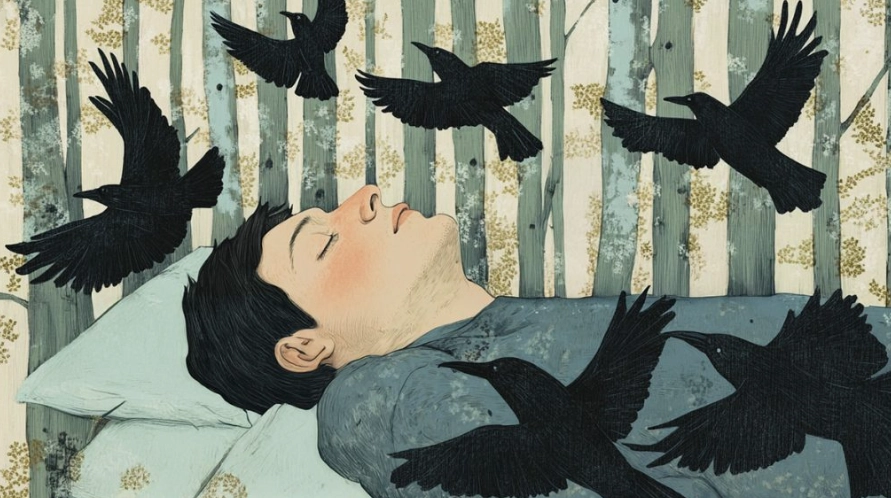
This amplifies the crow's energy. It could mean a collective transformation (e.g., a family or work dynamic changing), overwhelming intuition, or a sense that "something is in the air." It can also point to social intelligence—how you navigate groups, gossip, or community dynamics.
A Dead or Injured Crow
This often signals a blockage. Your intuition (the crow) is being ignored or wounded. Are you dismissing your gut feelings? Are you in an environment that stifles your intelligence or spiritual insight? This dream asks you to nurse that faculty back to health.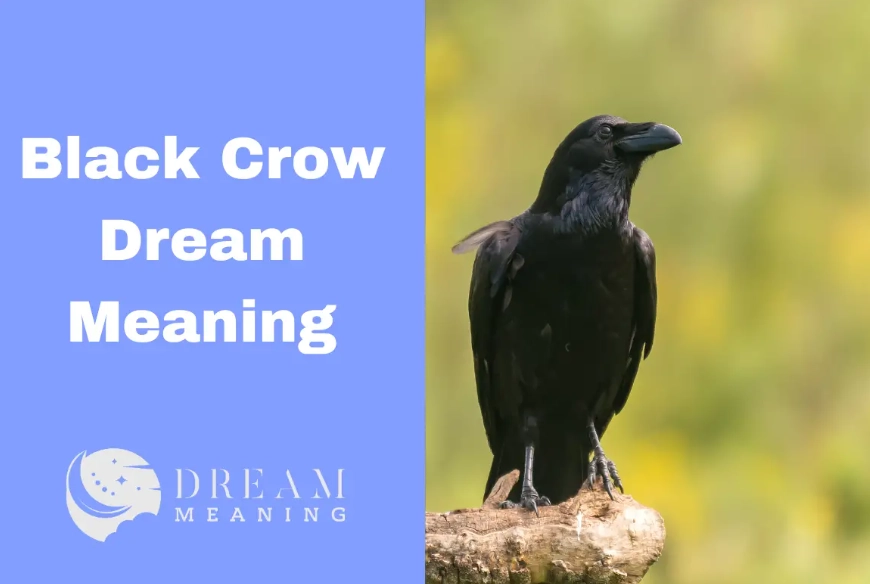
How to Interpret Your Own Crow Dream: A Practical Guide
Forget generic online lists. Here's a method I've used for a decade that actually works.
Step 1: Immediate Capture. Keep a notebook by your bed. The second you wake up, write everything. Images, emotions, colors, sounds, even the absurd bits. Don't edit.
Step 2: Emotional Inventory. Circle the dominant emotion. Were you scared? Curious? Awe-struck? Annoyed? This emotion is the compass for your interpretation. A fearful dream about a crow has a different message than a wondrous one.
Step 3: Symbol Breakdown. Treat the crow as one character in a play. Describe it like you would to a police sketch artist. Size, color, behavior, location. Then do this for every other major element (the tree it sat on, the house nearby, the weather).
Step 4: Personal Association. This is the most critical, most skipped step. Free-write for 5 minutes on the word "crow." What memories, songs, feelings, personal stories pop up? This is your unique symbolic dictionary.
Step 5: Life Context Bridge. Look at your waking life. Where are you in transition? What truth are you avoiding? What problem requires clever, "outside-the-box" thinking? The dream is a commentary on this.
Step 6: Craft Your Narrative. Combine it all: "The [adjective] crow in my dream, which made me feel [emotion], is like the part of me that is dealing with [life situation]. It might be telling me to [possible action based on crow's behavior]."
It's not about finding the one right answer. It's about starting a conversation with yourself.
Crow Dream FAQs: Beyond the Basics
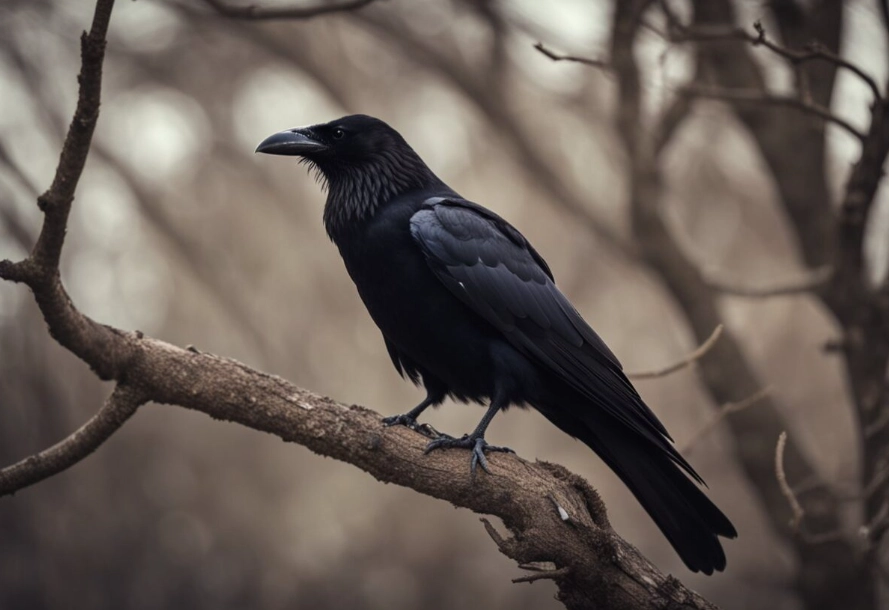 How can I tell if my crow dream is a spiritual message or just psychological processing?
 The dreaming crow is a challenge. It asks you to look into the dark, not with fear, but with curiosity. It asks you to be as smart, adaptable, and perceptive as it is. The next time one lands in your dreams, don't shoo it away as a bad omen. Grab your journal, and ask it what it knows. The answer might just change your waking life.








Comments
Join the Conversation