Quick Navigation
- First Things First: Shaking Off the Shock and Guilt
- Common Scenarios: What Exactly Happened in Your Dream?
- The Psychology Behind the Violence: What Do Experts Say?
- Your Personal Dream Decoder: Key Questions to Ask Yourself
- When Should You Be Concerned? (Spoiler: Rarely)
- What to Do After You Have This Dream: Practical Steps
- Frequently Asked Questions (The Real Stuff People Worry About)
- Wrapping It Up: From Nightmare to Insight
Let's be honest. Waking up from a dream where you've killed someone is a jarring, unsettling experience. Your heart might be pounding, a cold sweat on your skin, and this heavy, guilty feeling sitting in your gut even though you know, logically, you haven't done a thing. The first thought is often, "What the heck is wrong with me? Am I a violent person?"
I remember a friend confiding in me about his dream where he pushed a faceless figure off a cliff. He was a gentle guy, a teacher, and it shook him for weeks. He was too embarrassed to tell anyone else. That's the thing about these dreams—they feel so taboo, so dark, that we often lock them away, letting the anxiety fester.
Well, take a deep breath. You're not a monster. In fact, dreaming about killing someone is far more commonthan you'd think. It's one of those classic "shadow" dreams that taps into parts of our psyche we usually keep under wraps. This isn't about literal violence or criminal intent. It's symbolic, messy, and deeply personal. Your brain is working through something using its own dramatic, sometimes horrifying, language.
So, what's the message in the madness? That's what we're going to unpack. We'll ditch the generic dream dictionary stuff (they're mostly useless) and look at what modern psychology, neuroscience, and years of therapeutic work suggest these dreams mean. We'll cover the common scenarios, the feelings that go with them, and most importantly, what you can *do* with this disturbing information your subconscious has handed you.
First Things First: Shaking Off the Shock and Guilt
Before we dive into interpretations, let's deal with the immediate aftermath. The emotional hangover from a violent dream is real.
You feel guilty. How could I even imagine that? This is a normal reaction because you're a moral person. The dream clashes with your waking identity. But the guilt itself is a clue—it shows the dream content is alien to your conscious self, which is reassuring.
You feel scared. Does this mean I'm capable of this? In almost all cases, no. Dreams exaggerate. They deal in absolutes to make a point. Thinking about conflict becomes a dream about killing someone. Frustration becomes annihilation. The capacity for anger or aggression that everyone has gets blown up into a full-blown nightmare scenario.
My personal take? The very fact you're disturbed by it is the strongest evidence that it's not a reflection of your true character. People with violent tendencies don't usually lose sleep over dream violence; they might not even remember it. Your distress is a sign of a healthy conscience.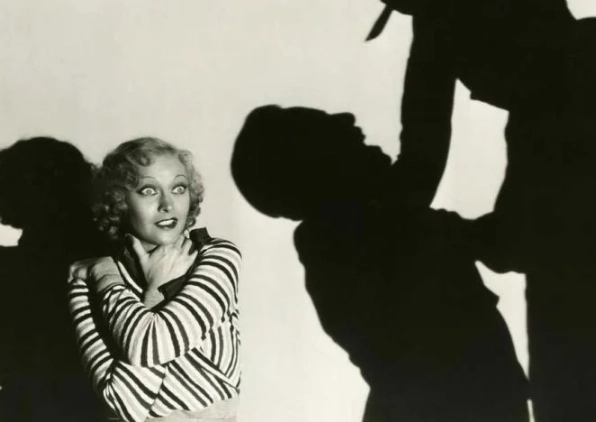
Common Scenarios: What Exactly Happened in Your Dream?
The details matter immensely. Dreaming about killing someone in self-defense carries a totally different weight than doing it in cold blood. Let's break down some frequent scripts.
Killing in Self-Defense or Protection
This is probably the most common variant. You're being attacked, threatened, or someone you love is in danger, and you fight back lethally. The feeling upon waking is often more of relief or adrenaline than pure horror.
What it often means: You're feeling threatened or cornered in your waking life. Something or someone is posing a serious challenge to your safety, your boundaries, your values, or your well-being. The dream is a dramatic enactment of your need to defend yourself. It might be a toxic relationship, an overbearing boss, a financial threat, or even an internal battle with an addiction or harmful habit. The "killing" symbolizes your mind's desire to completely eliminate that threat, to make it stop once and for all.
Question to ask yourself: What in my life feels like it's attacking me right now?
Killing a Stranger or Faceless Person
This one can be particularly confusing. There's no personal connection, just an act of violence against an unknown entity.
What it often means: The "stranger" likely represents an unknown or unacknowledged part of yourself, or a generalized force. It could symbolize anxiety, depression, a sudden life change, or an aspect of your personality you've disowned (like anger or ambition). Killing someone in a dream who has no face might be about trying to destroy these feelings or this unknown pressure. Alternatively, it could represent a desire to break free from societal pressures or anonymous expectations that feel oppressive.
Killing Someone You Know (Family, Partner, Friend, Colleague)
This is the big one that causes the most distress. Dreaming of killing your boss, your mother, your spouse. It feels deeply personal and wrong.
Here, it's crucial to separate the person from the *role* or *dynamic* they represent. You are almost certainly not dreaming of literally harming that person. Instead, they symbolize something about your relationship with them, or a quality they embody.
- Killing an authority figure (parent, boss): Often about a desire for independence, to "kill" their control, influence, or the expectations they place on you. It's about ending a power dynamic.
- Killing a partner or spouse: Rarely about wanting them gone. More commonly, it symbolizes a desire to end a specific phase of the relationship, a pattern of behavior, a dependency, or a feeling (like jealousy or resentment) that is "killing" the love between you.
- Killing a friend: Could represent ending a friendship, but more likely symbolizes wanting to eliminate a trait you see in them that you dislike in yourself, or ending a specific dynamic (like competitiveness).
The emotion during the dream is key. Is it rage? Sadness? Cold calculation? That emotion is the real message—the person is just the actor delivering it.
Accidentally Killing Someone
The dream isn't about intent, but about consequence. You cause a death through negligence, a mistake, or a chain of events you couldn't control.
What it often means: This screams anxiety about responsibility and unintended consequences. You might be worried about a decision you've made, a risk you've taken, or feeling like your actions (or inactions) could seriously harm someone else's life, career, or feelings. It's a dream of guilt and fear of causing damage you can't take back. Are you neglecting a relationship? Making a risky business move? This dream magnifies that fear.
Watching Someone Else Be Killed
You're not the perpetrator, but a witness. This can still be traumatic.
What it often means: Feelings of helplessness, passivity, or being caught in a conflict that doesn't directly involve you. You may be watching a relationship disintegrate, a colleague get "destroyed" at work, or some form of injustice you feel powerless to stop. The dream highlights your role as an observer rather than an active participant in your own life.
The Psychology Behind the Violence: What Do Experts Say?
Let's move from scenarios to theory. Different schools of thought have different takes on what it means to dream about killing someone. This table breaks down the main perspectives—see which one resonates with your own experience.
| Psychological School | Core Interpretation of Violent Dreams | Key Insight |
|---|---|---|
| Freudian Psychoanalysis | The dream fulfills a repressed, unconscious wish. The "someone" represents an aspect of yourself or a person you have deep-seated, hostile feelings towards that you cannot express consciously. | It's not a wish to murder, but a wish to be free of the pressure, conflict, or trait that person/symbol represents. |
| Jungian Psychology | The act of killing represents the "slaying of the dragon," a necessary step in individuation. You are confronting and attempting to integrate your "Shadow"—the dark, rejected parts of your personality. | Killing can symbolize an attempt to destroy the Shadow, but the healthier goal is to acknowledge and integrate it. The dream may show a clumsy attempt at this profound inner work. |
| Modern Cognitive & Neuroscience | Dreams are the brain's way of processing emotions and memories, particularly negative ones. The amygdala (fear center) is active, and the prefrontal cortex (logic center) is offline, leading to intense, irrational narratives. | A dream about killing someone is likely the brain's exaggerated rehearsal for handling extreme stress, conflict, or fear encountered in waking life. It's a stress simulation. |
| Threat Simulation Theory | Dreams, especially frightening ones, evolved as a safe practice ground for recognizing and responding to threats. | Your brain is running a drill for a high-stakes social or physical conflict, helping you prepare for real challenges, even if the drill scenario is extreme. |
Honestly, I find the strict Freudian view a bit too rigid and focused on childhood. The modern cognitive and Jungian blends often feel more practical. Most therapists I've spoken to lean into the idea of dreams as emotional processors and integrators.
For a deeper dive into the neuroscience of sleep and dreaming, the American Sleep Association has accessible resources on how brain activity during REM sleep contributes to these vivid narratives.
Your Personal Dream Decoder: Key Questions to Ask Yourself
Forget the one-size-fits-all meanings. The most accurate interpreter of your dream is you. Here’s a step-by-step way to break it down. Grab a journal and walk through this.
- Identify the Core Emotion. Was it rage? Fear? Panic? Cold detachment? Sadness? This emotion is the #1 most important clue. Your dream is likely showing you an emotion you are suppressing or struggling with during the day.
- Analyze the "Victim's" Role. Who were they in the dream? Now, what do they represent in your life? Are they an authority? A nurturer? A critic? A mirror of a part of yourself? Separate the person from the symbol.
- Examine the Method. Was it a passionate struggle? A calculated act? An accident? A distant push? The method speaks to your perceived relationship to the problem. An accident suggests feeling out of control. A calculated act suggests a deliberate, if extreme, desire for change.
- Contextualize Your Waking Life. This is the big one. What is happening right now? Are you under immense pressure? Going through a breakup? Facing a moral dilemma? Feeling powerless? The dream is a distorted reflection of this waking-life stress.
- Consider What Needs to "Die." Think metaphorically. What habit, relationship pattern, fear, job situation, or internal belief needs to end? The dream about killing someone is pointing to a necessary, if violent-seeming, ending.
Pro Tip: Try the "as if" exercise. Complete this sentence: "In my waking life, I feel as if I am being forced to kill..." or "I feel as if something in me has to die..." The answers that pop up are often startlingly accurate.
When Should You Be Concerned? (Spoiler: Rarely)
Let's address the elephant in the room. People worry that a dream about killing someone is a sign of latent violence or mental illness.
The vast majority of the time, it is not.
However, consistent, extremely graphic, and pleasurable violent dreams that increase in frequency *could* be a symptom worth discussing with a professional, especially if paired with:
- Real-life violent fantasies or urges.
- A history of trauma (PTSD often involves violent or recurrent nightmares).
- Feelings of dissociation or loss of control in waking life.
- The dreams cause significant daytime distress or fear of sleeping.
For individuals with PTSD, nightmares are a core symptom. Organizations like the American Psychological Association (APA) provide resources on trauma-informed therapy, which can include specific treatments for nightmares like Imagery Rehearsal Therapy.
Important: If your dreams are causing severe sleep avoidance or you are experiencing thoughts of harming yourself or others, please seek help immediately from a mental health professional. This article is for informational purposes and not a substitute for professional advice.
For most people, though, the dream is a signal, not a diagnosis. It's your psyche waving a big, red, dramatic flag saying, "Hey! Pay attention here!"
What to Do After You Have This Dream: Practical Steps
Okay, you've analyzed it. You've (hopefully) calmed down. Now what? How do you use this disturbing information?
1. Journal It Out (The Ugly Details)
Don't just think about it—write it. Every detail. The setting, the weapon, the words spoken, the weather. Writing engages a different part of the brain and can unlock connections. It also externalizes the dream, taking its power away.
2. Connect the Emotion to a Waking-Life Source
You felt utter rage in the dream. When did you last feel a flicker of that anger yesterday? Maybe when your partner dismissed your idea? Or when your boss took credit for your work? The dream emotion is an amplified version of a smaller, daily emotion you might be ignoring.
3. Consider a Constructive "Ending"
If the dream suggests something needs to "die," what would a healthy version of that look like? Instead of "killing" your overbearing boss, could you set a firmer boundary? Instead of "killing" your dependency, could you start a new, independent project? Translate the violent metaphor into a constructive action.
4. Talk About It (If You Feel Safe)
Sharing the dream with a trusted friend or therapist can be incredibly relieving. Saying it out loud often makes it seem less monstrous. You'll likely find they've had similarly bizarre dreams. It normalizes the experience.
5. Practice Stress-Reduction Before Bed
If these dreams are frequent, look at your pre-sleep routine. Are you watching violent shows? Arguing online? Scrolling through stressful news? Your brain uses the last inputs of the day as fodder. Try reading fiction, listening to calm music, or a mindfulness exercise instead.
Sometimes, just understanding that dreaming about killing someone is a known psychological phenomenon is enough to drain its terror. You're not alone in this.
Frequently Asked Questions (The Real Stuff People Worry About)
Does dreaming about killing someone mean I'm a violent person?
Almost certainly not. In fact, your distress about the dream is strong evidence against it. Violent dreams typically symbolize internal conflict, not literal violent intent. They are about metaphor, not prophecy.
Can this dream predict the future or mean someone will die?
No. There is no scientific evidence that dreams are precognitive. This is a superstitious belief. The dream is about your internal world and current stresses, not future events.
Why do I keep having the same killing dream over and over?
Recurrence means your psyche is really trying to hammer home a message you're not getting or a problem you're not addressing in your waking life. The issue it symbolizes is persistent and unresolved. Use the decoding questions above aggressively on the recurring dream.
Is it a sign of repressed anger?
It very often is. Unexpressed anger, frustration, or resentment can fester and then explode in dream imagery. The dream might be a safe outlet for that feeling, or a warning that you need to find a healthier way to address the source of your anger.
What if I enjoyed the dream? Does that make me a psychopath?
Not at all. The feeling of "enjoyment" in a dream is complex. It might represent a feeling of relief, power, or catharsis in finally confronting or destroying a source of oppression in your life. It's the symbolic victory you're enjoying, not the act of violence itself. Again, context and your waking-life feelings are key.
How can I make these dreams stop?
You don't control your dreams directly, but you can influence them by addressing the root causes. Work on stress management, process unresolved conflicts, express difficult emotions in healthy ways, and cultivate a peaceful bedtime routine. If the dreams are trauma-related, therapies like EMDR or IRT can be very effective.
Wrapping It Up: From Nightmare to Insight
Look, having a dream where you kill someone is never going to be a pleasant experience. I'm not going to sugarcoat that. It's shocking and can rattle you.
But if you can shift your perspective from "What's wrong with me?" to "What is my mind trying to show me?" you turn a nightmare into a powerful source of self-awareness.
That dream about killing someone is a piece of raw, unfiltered data from your inner world. It's showing you conflicts, fears, and desires that are too complex for your waking, logical mind to package neatly. It uses shock value to get past your defenses.
So next time it happens—and it might, especially during times of high stress or transition—don't panic. Get curious. Be a detective in your own psychological mystery. The answer isn't in a generic dream dictionary; it's in the specific details of your dream and your life.
Your mind isn't your enemy. Even when it sends you a horror movie, it's usually trying to help. It's just really, really bad at picking appropriate metaphors sometimes.
Take what's useful from the dream—the emotional truth, the symbol of what needs to change—and leave the guilt and fear behind. That's how you integrate the shadow, not by fearing it, but by understanding what it's trying to tell you in its own dramatic, unsettling way.









Comments
Join the Conversation