You know the feeling. You wake up, the echo of a vivid, bizarre, or beautiful image still pulsing behind your eyes. It was a drawing in your dream—a detailed sketch, a splash of color, a symbol so clear it felt real. Maybe you were holding the pencil. Maybe the image just hung in the air. And then, in seconds, it's gone, fading like mist. That frustration is real. But what if that fleeting vision was more than random brain noise? What if it was a direct message from your subconscious, a blueprint for creativity, or a key to understanding something you're missing while awake?
I've spent years tracking these nocturnal sketches, both in my own dream journal and by talking to artists and therapists. Most guides talk about dream interpretation in general, but they miss the unique, tangible power of a dream drawing. It's a different beast than just dreaming of a tiger. Creating an image in a dream involves agency, symbolism, and a direct line to your creative engine.
This isn't about becoming a perfect illustrator. It's about learning a new language. The language of your own mind.
What You'll Discover in This Guide
- What Drawing in Your Dreams Really Means
- How to Actually Capture Your Dream Art (Before It Vanishes)
- Using Dream Drawings to Smash Through Creative Block
- Decoding the Doodles: A Look at Common Dream Drawing Symbols
- The Next Level: Drawing During Lucid Dreams
- Your Burning Questions About Drawing in Dreams, Answered
What Drawing in Your Dreams Really Means
Let's cut through the vague stuff. Dreaming of drawing isn't a one-size-fits-all sign you should quit your job and go to art school (though it might be!). The meaning is in the specifics—the context everyone else ignores.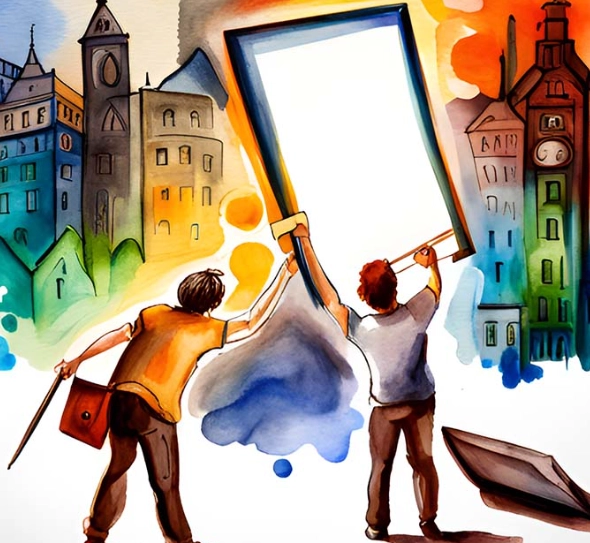
Are you drawing freely on a blank canvas, feeling joy? That's often your subconscious celebrating untapped potential or a desire for unbounded expression. I remember a period of intense corporate work where I kept dreaming of drawing wild, colorful murals on my office walls. It wasn't subtle.
Are you struggling to draw? The pencil breaks, the paper tears, the lines won't obey. This almost always mirrors a real-life feeling of frustration where your plans or self-expression feel blocked. Pay attention to what you're trying to draw. Is it a face you can't quite get right? Maybe there's a relationship or personal identity issue you're struggling to figure out.
What are you drawing? A house, a maze, a specific person? The subject is your first clue. The act of drawing it yourself, however, adds a crucial layer: active processing. You're not just observing a symbol; you're consciously (or subconsciously) constructing it. This can mean you're actively working through an idea, a problem, or an emotion related to that subject.
Here's the non-consensus bit most articles won't tell you: The quality of the drawing in the dream matters less than the feeling. A childlike scribble that fills you with profound peace is far more significant than a technically perfect portrait that leaves you cold. Your emotional response is the true compass.
How to Actually Capture Your Dream Art (Before It Vanishes)
The biggest pain point is memory loss. You swear you'll remember, and by the time you've brushed your teeth, it's a ghost. This process isn't mystical; it's a practical skill. Forget trying to recall the whole dream narrative. Focus solely on the visual image.
Step 1: The Bedside Kit (Non-Negotiable)
Your phone's notes app is better than nothing, but it engages the linguistic brain. You need to bypass words and go straight to visuals. Keep by your bed:
- A small sketchbook with blank, unlined pages.
- A couple of soft pencils or a black pen.
- A dim, red-light flashlight or book light (blue/white light will jolt you awake and kill sleepiness).
This setup signals to your brain: "We do art here."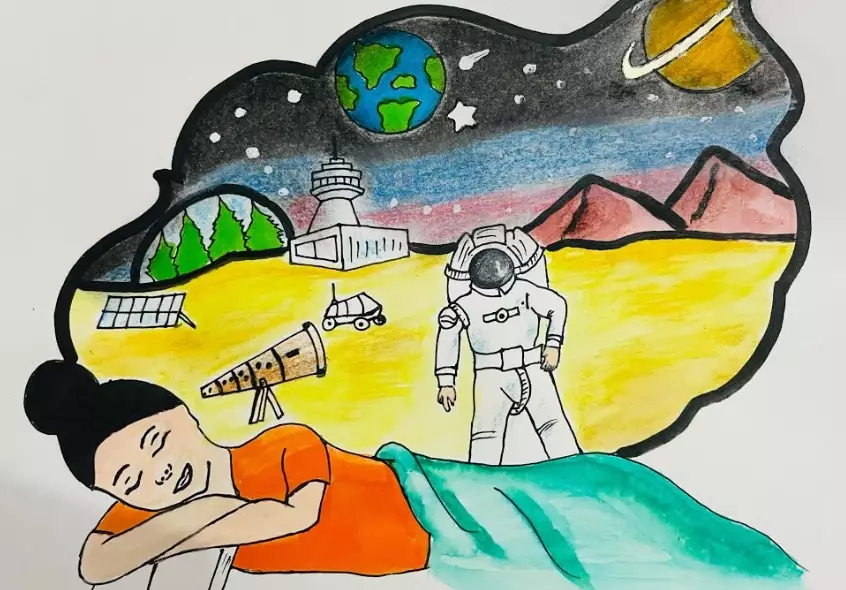
Step 2: The "First Glimpse" Sketch
Upon waking, don't move. Don't think about your day. Keep your eyes closed if you can. Reach for the sketchbook blindly. Your first job is not to create art. It's to make visual notes.
Draw the core shapes. A spiral here, a jagged line there, a rough outline of a figure. Use words as labels if needed: "blue background," "feeling of panic." This should take 60 seconds. Fidelity is irrelevant; capturing the essence is everything.
Step 3: The Morning Refinement
Later, with coffee, look at your scribble. Now, on a new page, try to draw it more deliberately. This isn't about improvement; it's about exploration. As you redraw, more details often surface—a color you forgot, a symbol hidden in the background. This two-stage process is what finally worked for me after years of losing dreams.
Using Dream Drawings to Smash Through Creative Block
Artists from Salvador Dalí to Billy Joel have used dreams for ideas. But you don't need to be a master. Your dreaming mind has zero editor, zero critic. It makes bizarre, unfiltered connections. That's pure creative fuel.
Try this exercise: Pick a recent, vivid dream drawing from your journal. Now, in your waking work, use one element from it. Just one. The strange texture, the impossible perspective, the odd color combination. Incorporate it into your design, your writing, your problem-solving at work.
It forces your brain down a new path.
A graphic designer client of mine was stuck on a logo. She dreamed of drawing an oak tree where the roots were made of intricate clockwork. She felt silly, but she took the "root-clockwork" idea. The final logo for the tech company wasn't a tree at all, but a network node with subtle gear-like connections. It was the breakthrough. The dream provided the metaphorical bridge her conscious mind was blocking.
Decoding the Doodles: A Look at Common Dream Drawing Symbols
While personal context is king, some drawn symbols pop up frequently. Don't take this as a fixed dictionary, but as a starting point for your own questions.
| What You're Drawing | Common Associations & Questions to Ask Yourself |
|---|---|
| Mazes or Labyrinths | Feeling lost in a decision, relationship, or life path. Are you drawing your way in or out? The act suggests searching for a solution. |
| Endless Spirals | Cyclical thoughts, obsession, or being stuck in a routine. Could also indicate a process of inner growth or descent. |
| Faces (Unclear or Shifting) | Unresolved relationships, aspects of yourself you're integrating or rejecting. Is it a known person or a stranger? |
| Architectural Plans | Building something new in your life—a career, a home, a project. Are the plans coherent or chaotic? |
| Maps | Direction, life journey. Are there clear landmarks or is it blank? This often appears during times of transition. |
| Abstract Color Fields | Pure emotion. Don't search for objects. What's the feeling? Red rage, blue calm, chaotic splatters of anxiety? |
The Next Level: Drawing During Lucid Dreams
Lucid dreaming—knowing you're dreaming while in the dream—opens a wild frontier. You can consciously decide to draw. The results can be profound or... hilariously unstable.
In a lucid state, I once tried to draw a portrait of a dream character. The face kept melting and reforming. It was frustrating in the moment, but the lesson was clear: my perception of that person (a former colleague) was fluid and not fixed. The dream drawing became a dynamic insight, not a static picture.
If you practice lucid dreaming, make drawing a goal. Ask the dream for a canvas and tools. See what appears. The materials themselves (charcoal that sings, paint that moves) can be messages. The key is to engage with the process, not control the outcome. Trying to force a perfect drawing often wakes you up or distorts the dream. Go with the flow of the subconscious medium.
Your Burning Questions About Drawing in Dreams, Answered
The journey of drawing in dreams is a lifelong conversation with the deepest part of yourself. It's messy, surprising, and deeply personal. Start with the sketchbook by your bed. Be kind to your clumsy morning scribbles. Ask questions of the images. You're not just keeping a dream journal; you're building a portfolio of your inner world. And that might be the most creative project you ever undertake.










Comments
Join the Conversation