You jolt awake, heart hammering against your ribs, the phantom sensation of a blade still chilling your skin. A dream where you were stabbed isn't just a bad dream—it's a visceral, shocking experience that can leave you feeling vulnerable for hours. I've been analyzing dreams for over a decade, and this is one of the most common yet distressing themes people bring to me. Let's be clear: it's almost never about a literal prediction of violence. Your dreaming mind is a master of metaphor, and a stabbing is one of its most dramatic symbols for a penetrating emotional injury.
The feeling of violation is the key. Something has gotten past your defenses.
What You'll Find in This Guide
What Does It Mean When You Dream of Being Stabbed?
At its core, dreaming of being stabbed symbolizes a profound sense of being hurt, betrayed, or attacked on a non-physical level. The weapon—a knife, a shard of glass, sometimes even an icicle—represents a sharp, pointed force. The act of stabbing implies a deliberate, targeted penetration of your boundaries.
Think about the last time someone's words "cut" you, or a piece of news felt like a "punch in the gut." This dream takes that metaphor and makes it literal, amplifying the feeling so you can't ignore it. Research into threat simulation theory, like that discussed by institutions such as the American Psychological Association, suggests nightmares may serve a function in preparing us to handle threats. An emotional "stab" is a threat your psyche is urging you to address.
The 7 Most Common Interpretations of a Stabbing Dream
Based on countless client sessions and pattern recognition, these seven scenarios cover about 95% of the stabbing dreams I encounter. Your specific details will point you to the most relevant one.
1. Feeling Betrayed or Backstabbed
This is the classic. It doesn't require an epic betrayal. It could be a friend forgetting an important date, a colleague taking credit for your idea, or sensing disloyalty in a relationship. The dream manifests the lingering sting of trust being broken.
2. Harsh Criticism or Verbal Attacks
Words can be weapons. If you've been on the receiving end of severe criticism—from a boss, a parent, or even your own inner critic—that "attack" can morph into a physical stabbing in your dreamscape. The dream highlights how deeply the comments wounded you.
3. A Sudden, Painful Life Change
Job loss, an abrupt end to a relationship, an unexpected diagnosis. These events can feel like a violent, piercing intrusion into your life's plan. The stabbing dream captures the shock and the feeling of being blindsided by circumstances.
4. Violation of Personal Boundaries
Someone demanding too much of your time, energy, or emotional resources. A family member who constantly oversteps, a partner who doesn't respect your privacy. The dream symbolizes the feeling of your personal space being forcibly and painfully invaded.
5. Internal Conflict and Self-Sabotage
Sometimes, you're the attacker. Dreams where you stab yourself, or where the attacker is a shadowy figure that might be you, point to intense inner conflict. Are you criticizing yourself mercilessly? Sabotaging your own goals? The dream is a stark picture of you being your own worst enemy.
6. Absorbing External Negativity or "Psychic" Attack
This interpretation leans more spiritual. If you're highly empathetic or in a toxic environment (a stressful workplace, a negative social circle), you might be unconsciously absorbing the anger, jealousy, or negativity of others. The dream symbolizes this energy "piercing" your energetic field.
7. A Wake-Up Call to a Festering Problem
The pain in the dream is a direct analog to a problem you're avoiding. A financial issue, a health concern you're ignoring, a relationship conversation you're dodging. The stabbing is your mind's last-ditch effort to get you to pay attention to this "painful" subject.
How to Respond After a Disturbing Stabbing Dream
Don't just shake it off and check the news for crime reports. That bypasses the whole point. Here's a practical, three-step process I guide my clients through.
Step 1: Immediate Grounding (The 5-4-3-2-1 Method)
As soon as you're awake and feel the panic, anchor yourself. Name 5 things you see, 4 things you can touch, 3 things you hear, 2 things you smell, 1 thing you taste. This pulls you out of the dream's emotional vortex and into your present, safe room.
Step 2: Journal with Specific Prompts
Later in the day, write it down. But move beyond just description. Ask these questions:
- What was the emotional quality of the pain? Was it more shock, betrayal, fear, or anger?
- Who was the attacker? (If unknown, what did they feel like?)
- In my waking life, what currently feels like an attack, a violation, or a sharp pain?
The answer to that last question is your gold mine.
Step 3: Take One Small Action
Based on your journaling, do one tangible thing. If it's about boundaries, practice saying "no" to one small request. If it's about criticism, write down three counter-arguments to that inner voice. If it's about a festering problem, spend 15 minutes researching a solution. This action tells your subconscious you've heard the message and are responding, which can prevent recurring versions of the dream.
The Expert View: A Common Mistake Everyone Makes
Here's the subtle error I see constantly: people fixate on the object—the knife. They search for "knife dream meaning" and get lost in generic symbolism. The knife is just the delivery mechanism. The critical elements are the action (stabbing), the wound it creates, and the relationship between you and the attacker.
A client once dreamed her mother stabbed her with a butter knife. She was fixated on the butter knife being "dull" and "domestic." I shifted her focus: "What matters is your mother, a source of nurture, is causing you pain with a domestic object in a familiar setting." The dream wasn't about violence; it was about the slow, daily, domestic friction that was wearing her down—the "death by a thousand cuts" she was experiencing in their relationship. The moment she saw that, the dream made complete sense and stopped recurring.
Look past the weapon. Look at the wound and the dynamic.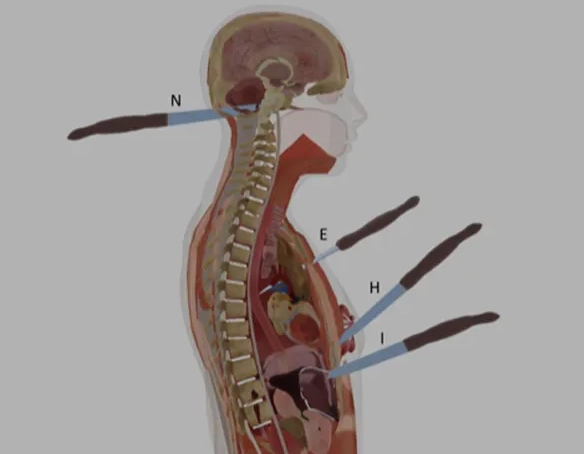
Your Questions Answered
A dream of being stabbed is a powerful communication. It's uncomfortable, even frightening, but it's not random. It's a stark metaphor created by your own mind to highlight a pain that needs your attention. By moving past the initial shock and engaging with the symbolism—the wound, not just the weapon—you can uncover valuable insights about your emotional landscape and take steps toward genuine healing. The next time you wake up from such a dream, remember: your psyche isn't trying to scare you for no reason. It's trying, in the most dramatic way it knows, to get you to tend to a wound that's already there.












Comments
Join the Conversation