I woke up with my heart pounding, the cold feeling of concrete under my feet still vivid. The dream was always the same: stuck in a gray cell, waiting for a sentence I never heard. This wasn't a one-time thing. For months, this jail dream kept showing up, uninvited. I started obsessing. Was it a premonition? A sign of deep guilt? It felt ridiculous, but the anxiety was real.
If you're here, you've probably had your own version. That dream about being in jail leaves a residue, a quiet unease that follows you into the morning. Let's cut through the generic dream dictionary fluff. A jail dream is complex, personal, and often brutally honest about your waking life. It's less about literal imprisonment and more about the invisible walls we build or find ourselves up against.
What's Inside This Guide
The Real Meaning Behind Your Jail Dream
Most articles will shout "YOU FEEL TRAPPED!" and call it a day. That's the obvious layer, and it's often true. But it's a starting point, not the finish line. The symbolism of a jail is rich. It's about restriction, punishment, isolation, and a loss of autonomy. But who's the warden? That's the question.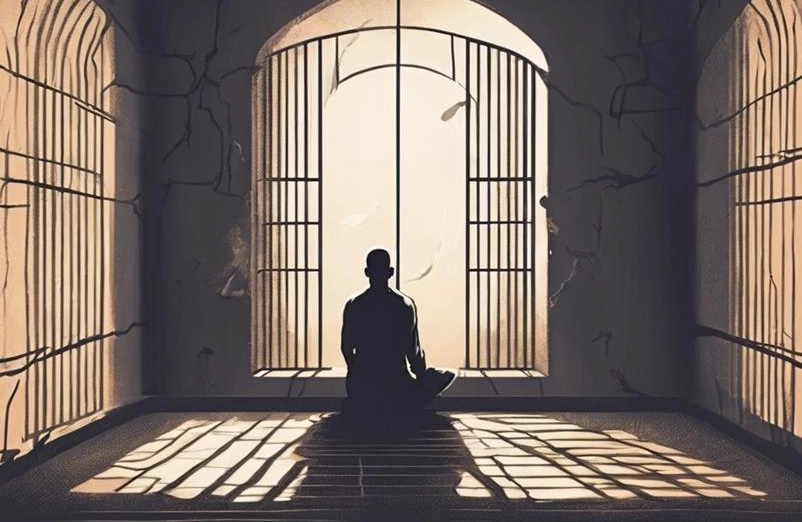
Based on years of talking to people about their dreams and diving into the work of psychologists like Carl Jung (who saw dreams as messages from the unconscious) and modern researchers, I see three core meanings that most jail dreams cluster around.
1. The External Prison: Situational Trapping
This is the most straightforward. Your dream is mirroring a real-life situation that feels inescapable. The bars are made of:
- A soul-crushing job with a micromanaging boss.
- Financial debt that dictates every decision.
- A toxic relationship where you've lost your voice.
- Caregiver fatigue, where your own needs are perpetually on hold.
The dream isn't subtle. It's your mind's dramatic way of saying, "Hello? We can't breathe here." The emotion in this dream is usually a heavy, resigned frustration, or a panicked claustrophobia.
2. The Internal Prison: Self-Imposed Limits
This one is trickier, because the jailer is you. Here, the jail represents:
- Limiting beliefs: "I'm not smart enough to change careers," "I don't deserve better."
- Fear of judgment: Constricting yourself to fit in, to be the "good" employee, partner, or child.
- Guilt or shame: Punishing yourself for a past mistake, long after everyone else has moved on.
- Rigid routines: A life so structured and safe it has become a cage of your own making.
The feeling here is often a dull ache, a sense of wasting away. You might see an open cell door in the dream but feel unable to walk through it. That's the hallmark of an internal prison—the lock is on the inside.
A Common Mistake Everyone Makes: People immediately assume their jail dream is about their job or partner. Sometimes it is. But often, it's about a part of yourself you've locked away—your creativity, your anger, your wildness, your need for rest. The dream is a protest from that exiled part. Before you blame your external world, ask: "What have I imprisoned within myself?"
3. The Protective Barrier: A Need for Boundaries
This is the least discussed meaning, and it flips the script. In some cases, dreaming of being in jail can signal a lack of necessary boundaries. The jail walls, in this context, might represent a subconscious desire for protection.
Are you feeling emotionally exposed or overwhelmed by others' demands? The dream could be a metaphor for your psyche trying to build a wall where there is none. It's not about feeling trapped in something, but about a desperate need to be kept safe from something. The emotion is less about frustration and more about vulnerability or a desire for quiet isolation.
How to Interpret Your Dream: Context is Everything
Forget universal symbols. A key in your dream isn't always freedom; it might be a responsibility. To crack your specific dream about being in jail, you need to investigate the crime scene. Ask these questions as soon as you wake up:
What was the cell like?
A clean, modern jail suggests a structured, perhaps corporate form of confinement. A dark, dungeon-like cell points to deeper, more primal fears or shame.
Were you alone?
Solitary confinement screams of isolation and loneliness. A cell with others might indicate shared struggles (like a difficult team at work) or a feeling that "we're all in this together."
What was the charge?
This is huge. Did you know what you did? Were you guilty, wrongly accused, or completely oblivious?
- Guilty and aware: Points to real guilt or a belief you've done something wrong.
- Wrongly accused: Feeling misunderstood, scapegoated, or unfairly treated in waking life.
- No charge/Don't know: Suggests a feeling of punishment without cause—life itself feels unfairly restrictive.
What were you doing/feeling?
- Trying to escape: Your active mind is seeking solutions.
- Passively waiting: You might feel helpless or resigned.
- Calm or accepting: Could indicate a need for a time-out, or a period of necessary containment.
Let me give you a personal example. My recurring jail dream shifted after I started a new, demanding project. The cell went from gray and empty to having a small, high window with light streaming in. I was still inside, but I felt calm. My interpretation? The project (the jail) was intense and restrictive, but I saw its purpose (the light). The dream was no longer about panic, but about acknowledging a voluntary, temporary period of focused work. The emotion changed the entire meaning.
How to Stop a Recurring Jail Dream
When the dream becomes a repeat visitor, it's time for action. The goal isn't just to stop the dream; it's to resolve the issue it's highlighting. Think of the dream as an alarm. You don't just want to smash the alarm; you want to put out the fire.
Step 1: The Daytime Audit
For one week, don't even focus on sleep. During the day, notice when you feel a tiny pang of that "jail feeling." Is it in the 3 PM meeting slump? When you check your bank account? When a certain person calls? Jot it down in a notes app. No deep analysis, just data collection. You're identifying the real-life "bars."
Step 2: Define One Small Escape
Based on your audit, pick ONE small, actionable item that represents bending a bar. Not breaking the whole wall. Just one bar.
- If it's work: "I will not answer emails after 8 PM on Tuesday."
- If it's a belief: "When I think 'I can't,' I will write down one tiny reason why maybe I could."
- If it's overwhelm: "I will block 30 minutes on Thursday for myself, and I will guard it."
The action must be specific and non-negotiable.
Step 3: The Pre-Sleep Rehearsal
Right before bed, as you're lying there, consciously revisit your dream. But this time, rewrite the script. Imagine yourself in the cell, then imagine finding a key under the cot, or the guard forgetting to lock the door, or simply realizing the bars are wide enough to slip through. Feel the relief of walking out. Don't force it, just play with the imagery. This isn't magical thinking; it's a signal to your subconscious that you're working on the problem and are open to new outcomes.
This three-step process works because it addresses the root cause in waking life, not just the symptom in your sleep.
Your Jail Dream Questions, Answered
Dreaming about being in jail is unsettling, but it's also a remarkable opportunity. It's a direct line to a part of your life—or yourself—that's calling for attention. By moving past the initial fear and learning to decode the specific imagery and emotions, you transform a source of anxiety into a tool for self-awareness. The goal isn't to never have a troubling dream again. It's to build a relationship with your inner world where even the dreams about confinement can ultimately point you toward greater freedom.











Comments
Join the Conversation