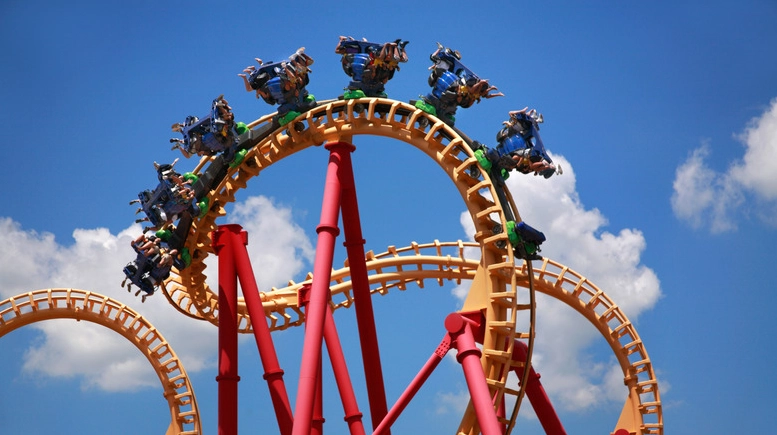
You wake up with your heart racing, still feeling the drops and twists from a roller coaster dream. It's vivid, maybe even thrilling or terrifying. But what does it mean? In my years as a dream analyst, I've found that roller coaster dreams are rarely just about fun—they're packed with symbolism about your emotions, life changes, and inner conflicts. Let's cut to the chase: dreaming of a roller coaster often mirrors the ups and downs in your waking life, signaling excitement, fear, or a lack of control. But the devil's in the details, and that's where we'll dive deep.
Quick Navigation: What's Inside This Guide
What Does Dreaming of a Roller Coaster Symbolize?
Roller coasters in dreams are powerful symbols. They're not random; they tap into your subconscious mind. Think about it—a roller coaster involves sudden climbs, sharp drops, loops, and that mix of thrill and fear. In dream analysis, this often translates to emotional volatility or life transitions.
From my experience, the core symbolism revolves around three key areas:
- Emotional Roller Coasters: Your dream might be reflecting daily stress or mood swings. If you're going through a tough time at work or in relationships, the dream acts as a metaphor.
- Life Changes and Uncertainty: Big events like starting a new job, moving, or even personal growth can trigger these dreams. The roller coaster represents the unknown path ahead.
- Control and Lack Thereof: Are you strapped in or falling out? This detail matters. It shows how in control you feel in real life.
I've seen clients who dismiss these dreams as mere anxiety, but that's oversimplifying. Sometimes, a roller coaster dream can signal excitement about new opportunities—not just fear. It's a nuanced symbol.
Common Scenarios in Roller Coaster Dreams
Not all roller coaster dreams are the same. The specific scenario changes the meaning drastically. Let's break down the most frequent ones I've encountered in my practice.
| Dream Scenario | Possible Meanings | What to Consider in Your Waking Life |
|---|---|---|
| Riding a roller coaster with excitement | You're embracing change or seeking adventure. It could indicate a positive outlook on challenges. | Are you starting a new project or taking risks? This dream might be encouraging you. |
| Feeling terrified on the ride | Anxiety about upcoming events or fear of losing control. Common during stressful periods like exams or deadlines. | Identify sources of stress. The dream is a wake-up call to manage your emotions. |
| Watching others on a roller coaster | You might feel like a bystander in your own life, observing changes without participating. It can signal detachment or envy. | Ask yourself if you're actively engaged in your decisions or just going with the flow. |
| The roller coaster breaks down or derails | This often points to fears of failure or unexpected setbacks. It's a warning sign from your subconscious. | Review your plans for potential pitfalls. Are you pushing too hard? |
| Dreaming of a specific roller coaster from memory | Your mind is linking past experiences to current emotions. Maybe a childhood ride symbolizes innocence or nostalgia. | Reflect on what that place means to you. It could highlight unresolved feelings. |
See how the details shift the interpretation? That's why generic dream dictionaries often fail. They miss the personal context.
Riding vs. Watching: A Key Distinction
If you're riding the roller coaster, you're directly involved in the emotional ups and downs. It's personal. Watching from afar? That suggests you're distancing yourself from turmoil, maybe avoiding confrontation.
I had a client, Sarah, who kept dreaming of watching her friends on a roller coaster while she stood ground. Turned out, she felt left out in her social circle after a promotion. The dream wasn't about thrill; it was about isolation.
How to Interpret Your Roller Coaster Dream: A Step-by-Step Guide
Don't just guess what your dream means. Follow this practical approach to decode it yourself. It's what I use in sessions, and it works because it's tailored to you.
- Recall the Details Immediately After Waking: Write down everything—the colors, sounds, people, and how you felt. Emotions are crucial here. Was it fun or frightening?
- Identify the Core Elements: Focus on the roller coaster itself. Was it old or new? Fast or slow? These aspects mirror your perception of life's pace.
- Link to Current Life Events: Ask yourself: What's happening right now? Job stress? Relationship issues? Big decisions? The dream often comments on these.
- Consider Your Emotional State: Are you generally anxious or excited? Your waking mood tints the dream. A roller coaster dream during a happy phase might mean anticipation, not dread.
- Look for Patterns: If you have these dreams repeatedly, track them. They might highlight ongoing struggles you're ignoring.
Most people skip step 3, and that's a mistake. Dreams don't exist in a vacuum. They're responses to your reality.
Pro Tip: Keep a dream journal by your bed. Jot down keywords as soon as you wake up. Over time, you'll see connections you missed before. I've done this for years, and it's revealed insights even I didn't expect.
The Psychology Behind Roller Coaster Dreams
From a psychological standpoint, roller coaster dreams are rich with meaning. They're not just random brain firings during REM sleep. Theories from Freud to modern neuroscience shed light on why they occur.
According to the American Psychological Association, dreams often process daily emotions and stress. A roller coaster dream could be your mind's way of simulating control in chaotic situations. It's like a mental rehearsal.
Carl Jung might see it as a symbol of the individuation process—the ups and downs of self-discovery. The loops and drops represent internal conflicts you're working through.
In cognitive psychology, these dreams might relate to memory consolidation. If you've been on a roller coaster recently, your brain could be replaying the experience, mixing it with emotional cues.
But here's a non-consensus view I've developed: roller coaster dreams often spike during times of positive uncertainty, not just negative stress. When clients are about to achieve a goal, they dream of thrilling rides. It's the subconscious celebrating risk, not just fearing it.
I remember reading a study from the University of California that linked vivid dreams to emotional regulation. It's not just about fear; it's about processing excitement too.
A Personal Case Study: When Dreams Reflect Reality
Let me share a story from my practice. Mark, a 35-year-old engineer, came to me with recurring roller coaster dreams. He described them as terrifying—always falling out at the highest drop. In his waking life, he was up for a promotion but hesitant to take it.
We dug deeper. The roller coaster was always at an amusement park he visited as a kid, which he associated with family pressure. The dream wasn't just about job anxiety; it was about fear of repeating past failures under expectation.
By linking the dream to his childhood memories and current stress, Mark realized he was sabotaging his own progress. He took the promotion, and the dreams faded. They returned later, but as exciting rides—his mind had shifted its narrative.
This case shows how dreams blend past and present. It's not enough to say "roller coaster means change." You need the personal touch.
FAQ: Your Burning Questions Answered
 Can roller coaster dreams be positive if I enjoy them in the dream?
Dreams are personal, so take these answers as starting points. Your own context will shape the meaning.
Writing this, I'm reminded of my own roller coaster dream during a cross-country move. It was chaotic, but in hindsight, it captured the excitement of the unknown. That's the beauty of dream analysis—it's a mirror, not a mystery.








Comments
Join the Conversation